

Addo Elephant and Mountain Zebra National Parks
In transit to our Drakensberg mountain adventures, we visited two more South African national parks: Addo Elephant and Mountain Zebra.
We had a challenging start when we arrived at a remote and little-used sector of Addo: the Kabouga section near the town of Kirkwood. Ken chose this for our overnight stay because we would be driving the one-way, permit-only Bedrogfontein four-wheel-drive trail from this sector into the Darlington section the next day. We would exit the park on the northwest side in Darlington before heading northeast to Mountain Zebra National Park.
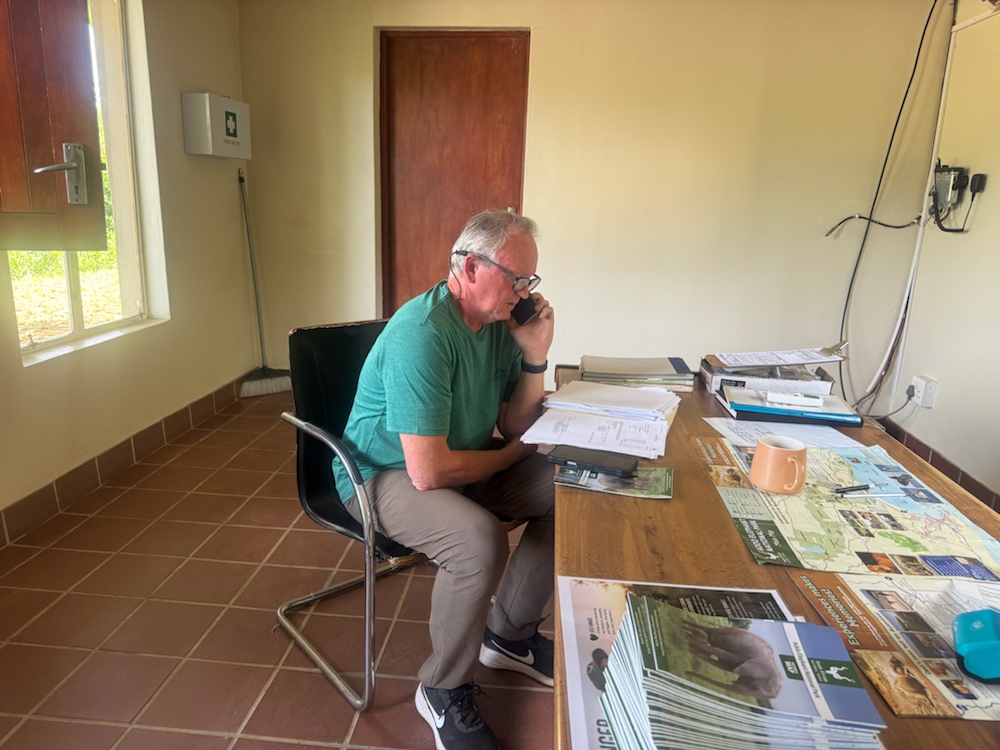 Ken sorting things out at Addo Elephant NP
The challenge was that our cottage hadn’t been cleaned yet; it had been sitting in the same state for a week after the previous guests left. Rains had swelled the river, and the cleaning crew had been unable to reach the cottage. They hadn’t tried to return because nobody was aware of our reservation! We clearly had one, fully paid for, and we had to resolve things with the off-site manager and two very helpful on-site staffers. It was late afternoon on a Sunday, and everyone was surprised that anyone had shown up at the gate to check in. They rallied their cleaning crew to race out to the cottage, and we embarked on a deliberately slow drive there.
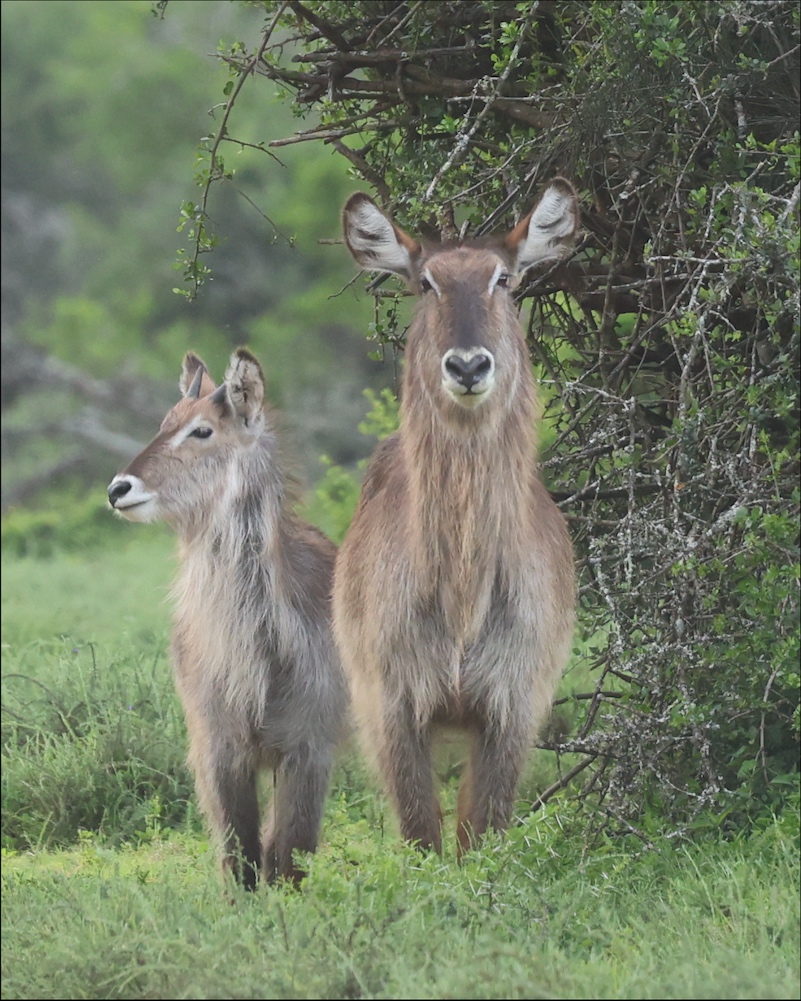 Two Waterbucks
We didn’t expect to see much in this part of Addo; we didn’t even believe elephants were in this sector. Later, we would learn that 44 African bush elephants had been introduced to Kabouga, and we saw some old evidence along the road: elephant dung. Besides our usual birding, we saw quite a bit on the drive in: waterbuck, kudu, eland, red hartebeest, springbok, and gemsbok. We even saw some ostriches and warthogs, which was surprising in this densely forested river valley.
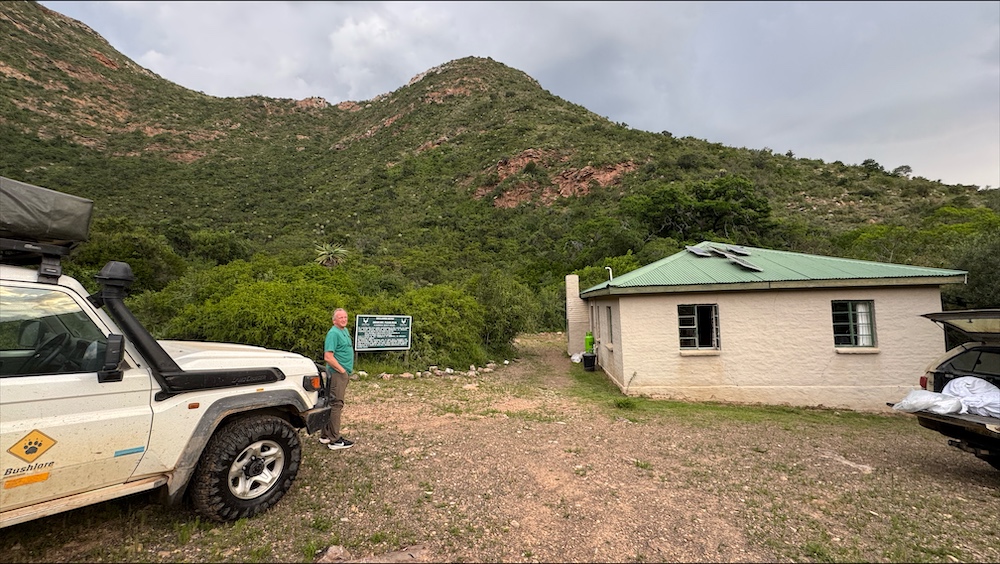 Waiting for Kabouga Cottage to be cleaned
The drive to the cottage was long and rugged, and we went slowly enough to greet the cleaning crew racing past us in an Isuzu truck driven by a ranger. After passing us, he backed up to ask if he could have our cottage key so the crew could get in to clean - he had left it behind at the entry gate. We had a great chat with the ranger as the crew finished up.
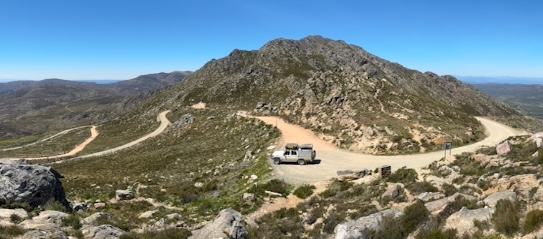
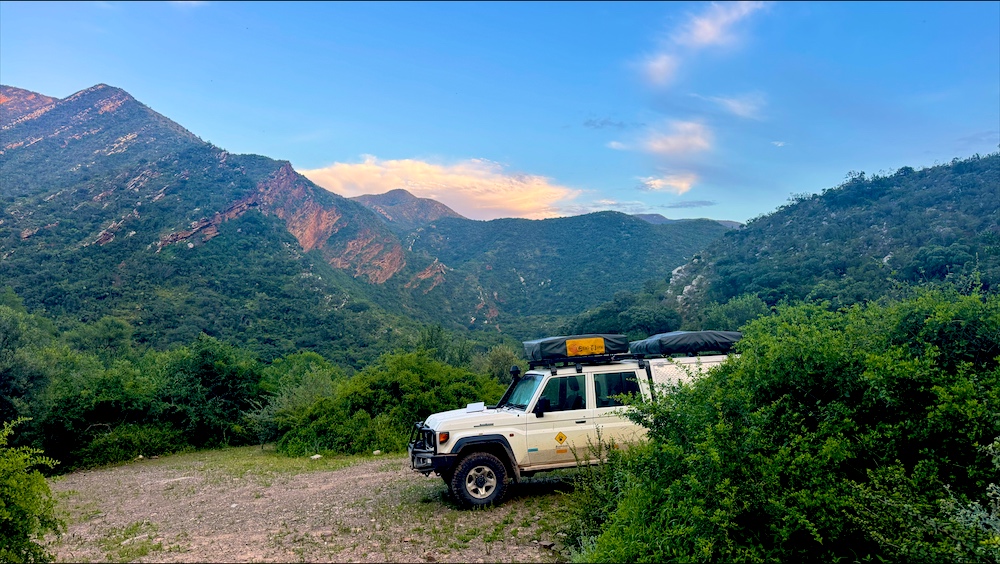 Addo landscape as we transition to Darlington sector
The birding was frustrating in the Kabouga area. The canopy was so dense that we’d hear birds but couldn’t locate them visually. Most frustrating was hearing what I think was a Narina trogon right near us and not finding it. Trogons and turacos are on our “desperately want to see” list, but we struck out in Addo. The drive was beautiful and challenging, probably the toughest single day of driving we’d done so far.
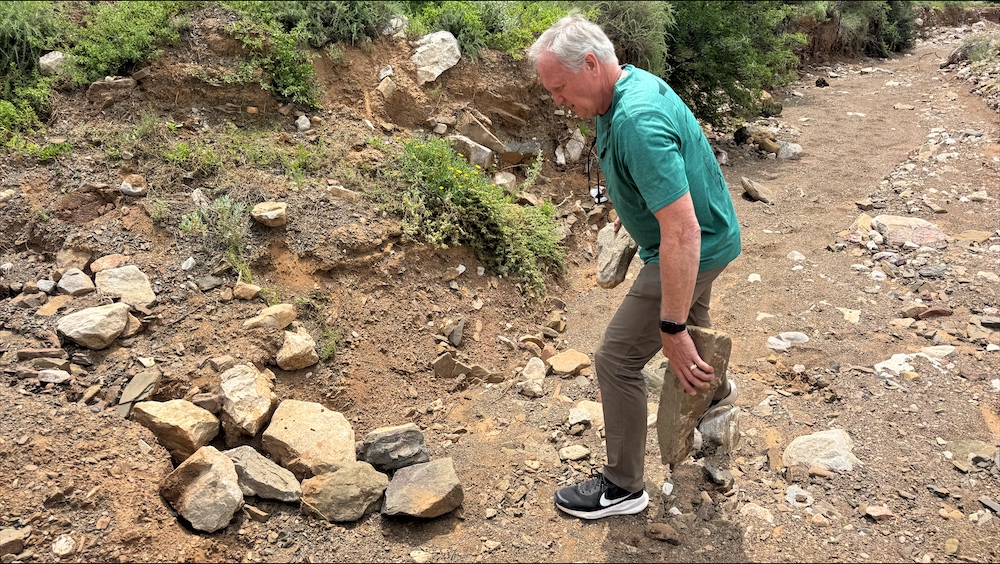 Ken and I reconstructing a ramp to escape riverbed
Quite a bit of the trail went through a rocky riverbed where the water was flowing strongly. This made it hard to see where the holes and other hazards might be. At other times, the trail crossed dry or running riverbeds, and in one case the exit was a ledge about three feet above the bed. It was much too high for us to drive over, so we exited the vehicle and harvested rocks to build an exit ramp.
At the exit gate in Darlington, the ranger told us that there had maybe been one other vehicle to attempt the trail in the previous six months.
Next up was Mountain Zebra National Park, where we received a more typical and professional greeting. They expected us and even provided a radio for us to use at the remote cottage where we’d be staying. The adjacent restaurant served us a great dinner, and we spotted some new birds from the dining deck while we ate.
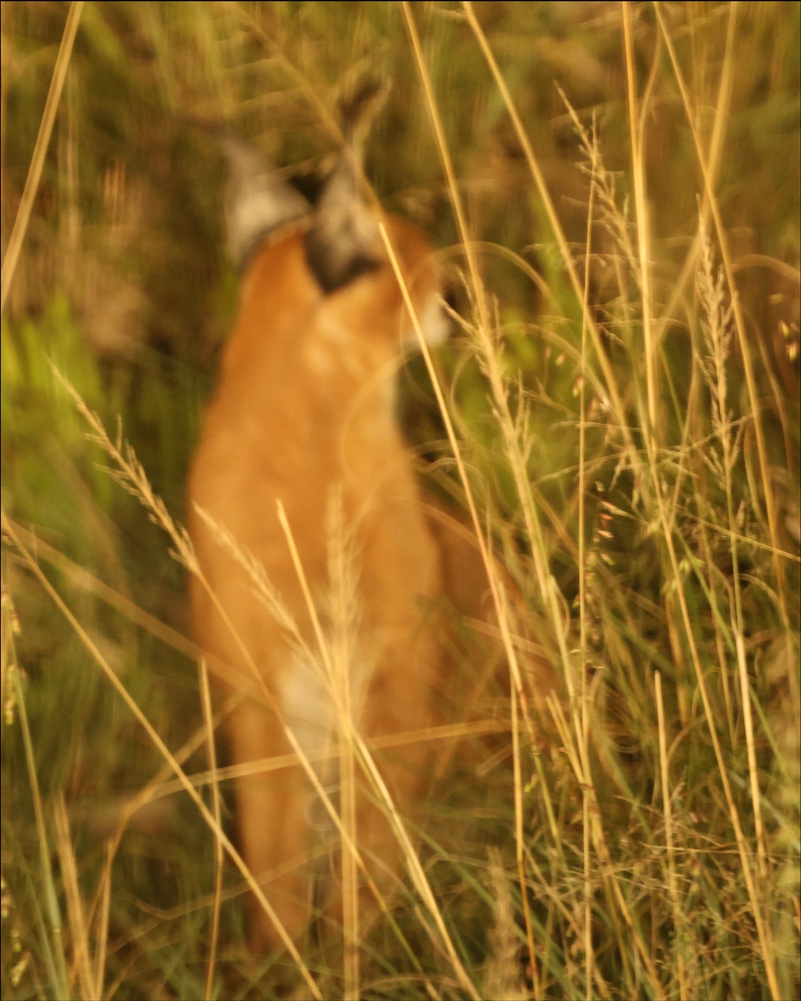 Caracal
Because we were staying in the remote Umthombo mountain cottage, we were permitted to drive along the paved road and then the four-wheel-drive road after dark, giving us a bonus nighttime game drive. We first saw a black-backed jackal, then two caracals - an incredible sighting for us. Thankfully, one of them stopped long enough to turn and look at us so I could take this terrible-but-good-for-identification photo.
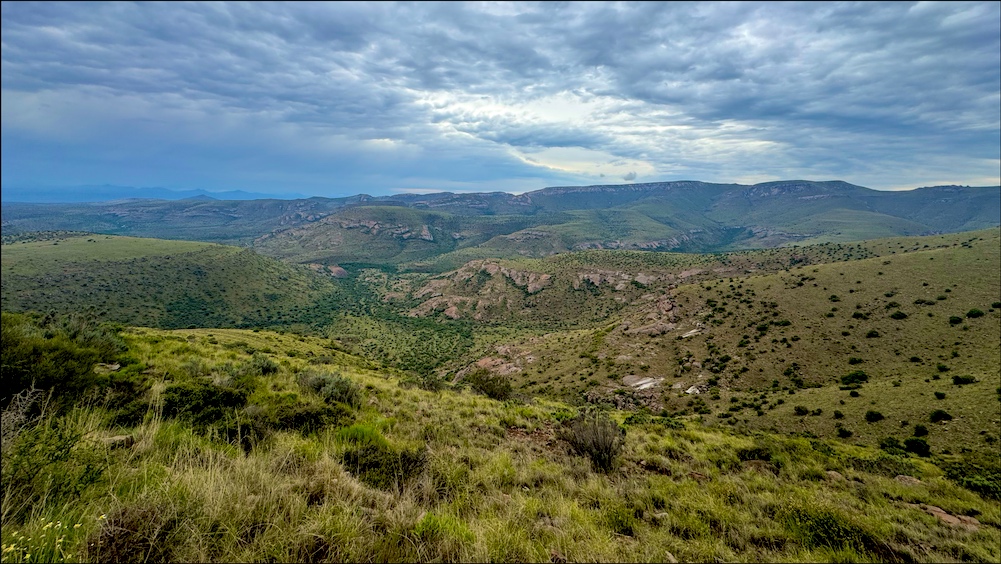 Mountain Zebra NP Landscape
We had a scheduled morning walk with a guide who would take us tracking cheetahs, but sadly the guide wouldn’t arrive until the afternoon, so our prebooked adventure was canceled. The reception staff’s casual response was frustrating, especially because they didn’t offer us an alternative. Instead, we wandered the self-drive loops that morning to make the most of our visit. We found more breathtaking terrain, and birding returned to its prior levels of fun and discovery on the open plains.
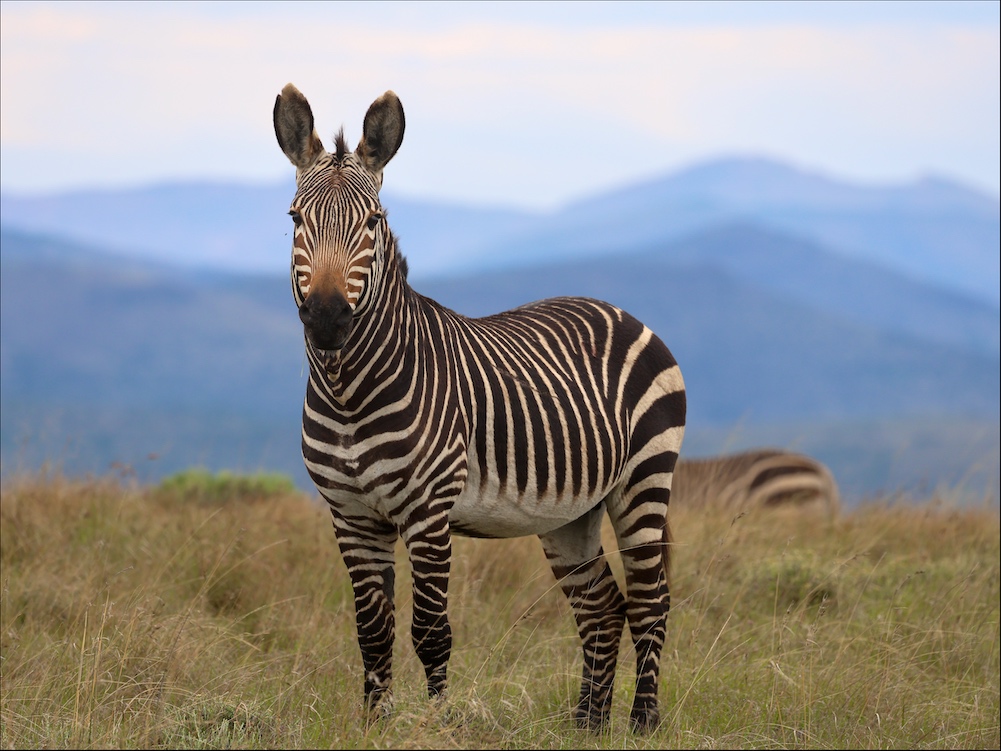 Cape Mountain Zebra
One highlight was seeing the nominate subspecies of mountain zebra that resides here: the Cape mountain zebra. These are the same species as the mountain zebras we saw in Fish River Canyon, but they are smaller and, in our opinion, even more boldly striped and strikingly colored.
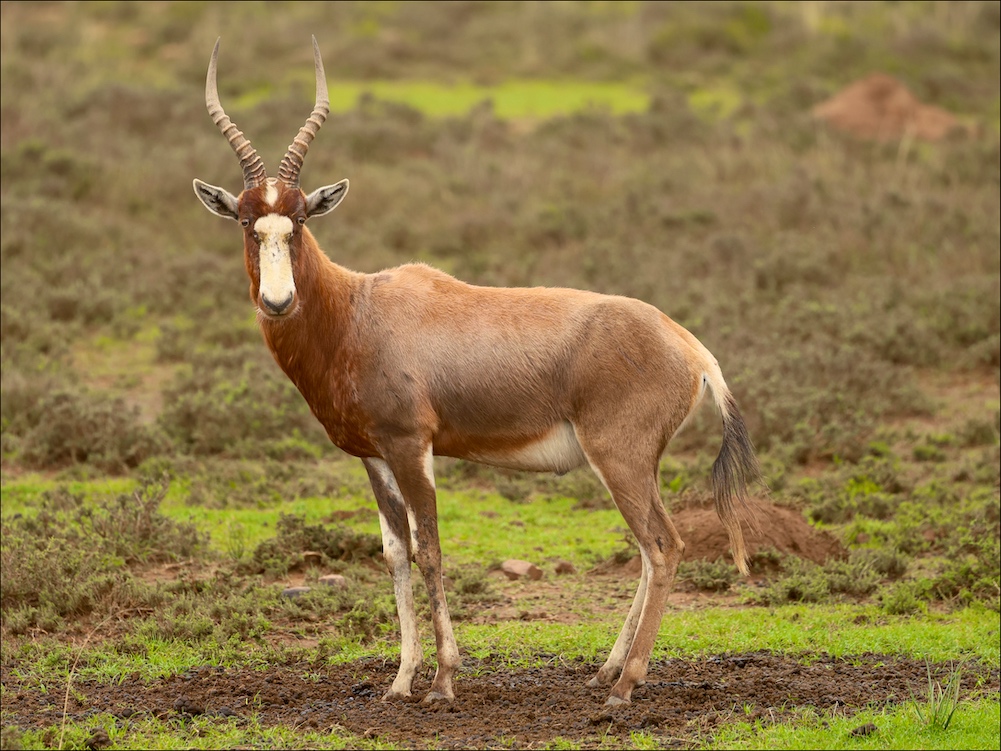 Blesbok
There’s also a blesbok population at Mountain Zebra National Park. The blesbok is another subspecies of Damaliscus pygargus; the bontebok is the nominate subspecies. The blesbok were a bit lighter in color, and there was a distinctive break in the central white stripe on the face just above the eyes.
We left the low mountains and plains of Mountain Zebra, driving northeast toward the massive wall of the Drakensberg near the Lesotho border.