

Namibia: Sossusvlei, Klein Aus, and Fish River Canyon
We closed out our Namibia adventure with more dunes, a beautiful mountain valley drive, and a deep canyon.
There’s an entrance to Namib-Naukluft National Park at Sesriem, and that’s where we stayed overnight. Our campsite was attached to a very nice lodge, but sadly we couldn’t make use of its amenities, instead having to use the state-run Namibia Wildlife Resorts (NWR) lodge for food and Wi-Fi. Wi-Fi became very important to us in Namibia because Starlink is a no-go there, and I had to set aside enough time for teaching work. We hung out for a long lunch and cold drinks before setting out for a sunset drive toward Sossusvlei and the dunes.
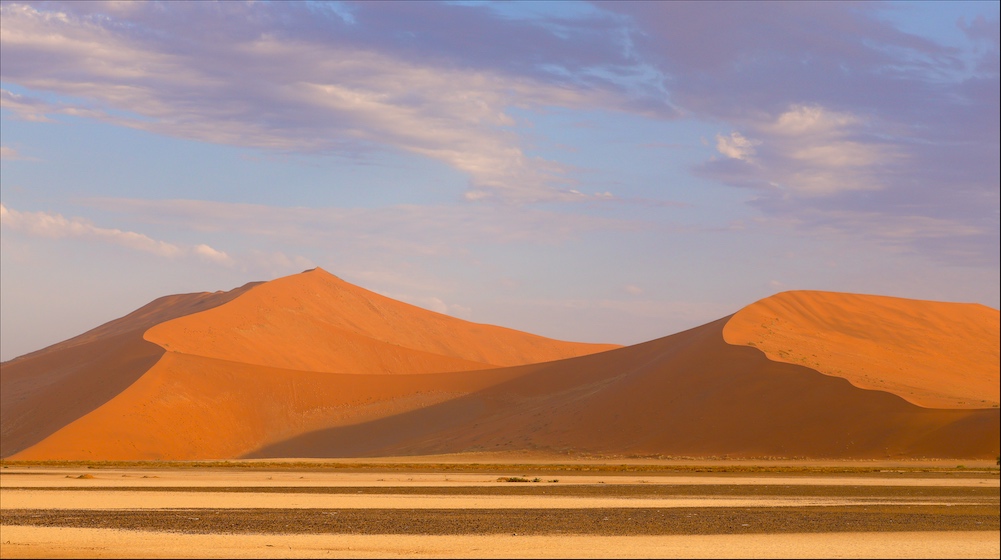 Dunes near Sesriem
The road was quiet, and we were able to mix in some birding alongside our dune gazing. A mostly dry riverbed runs through the valley, roughly parallel to the road, and the dunes start to rise and close in on the road about 40 km from Sesriem. As you can see, they are massive and spectacular. Near the end of the road (which we would revisit the next morning), we found two red-necked falcons feeding on a freshly killed speckled pigeon.
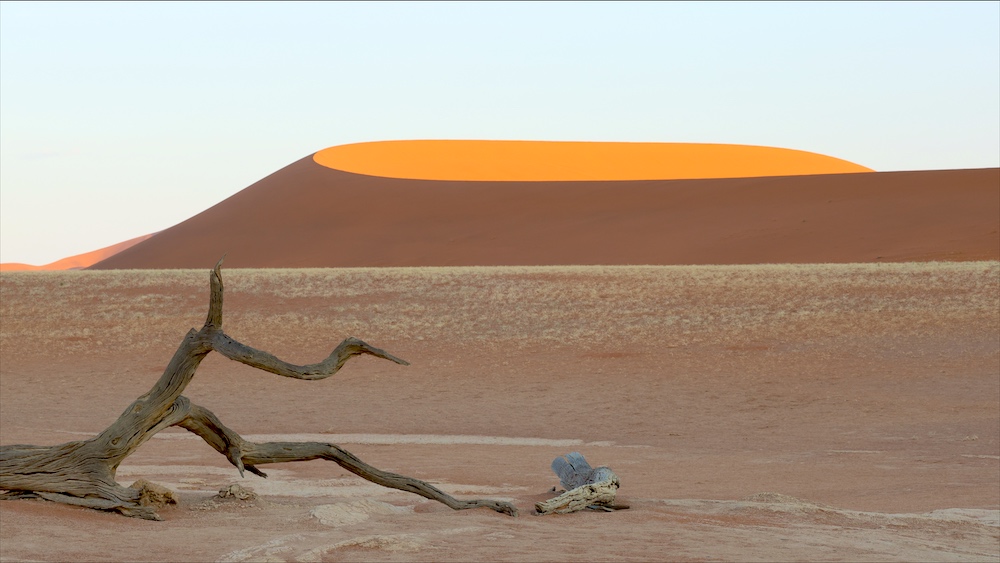 Dead tree in Deadvlei
An advantage of staying inside the park is a one-hour head start in the early morning to reach Sossusvlei and Deadvlei. We queued up at 5:40 a.m. along with 20 or 30 other vehicles. There’s a parking area at the end of the two-wheel-drive road; we aired down there and continued along the four-wheel-drive track to the final parking area, then walked to Deadvlei, a dry pan with a grove of dead camel thorn trees. The pan is below Big Daddy, which we opted to stare at rather than climb. Farther north is Big Mama, which is impressive, but the water-filled pan below it impressed us even more. Ken and I hung out there for about an hour taking inventory of the abundant birdlife.
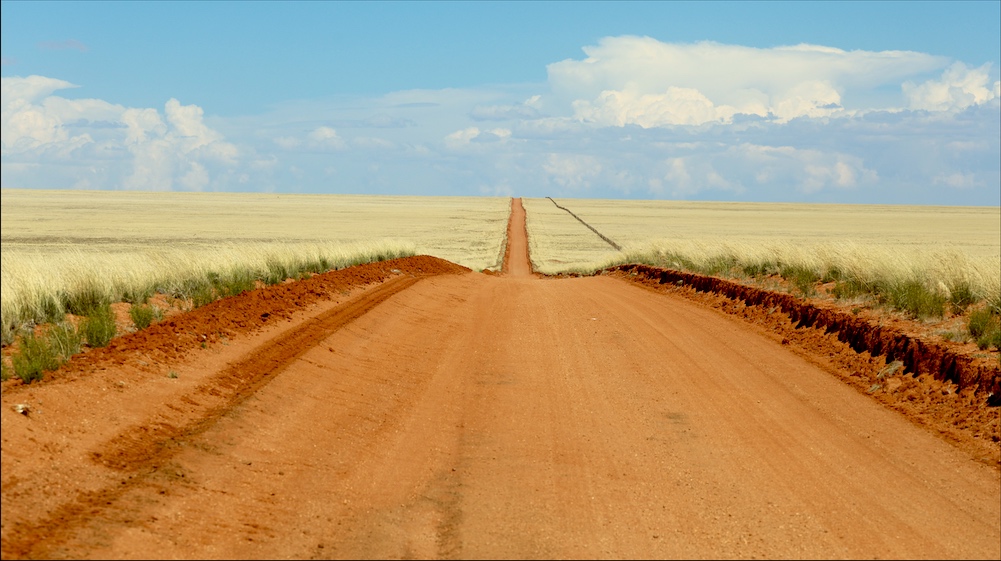 The magical road from Sesriem to Aus
Over dinner, Ken suggested an alternate and more scenic route to get to Klein Aus Vista: the D707, which would add a small amount of time but likely be quieter and prettier. It was an incredible drive, with wide, grass-filled valleys surrounded by mountains. It rivaled similar drives I’ve made through Utah and Colorado.
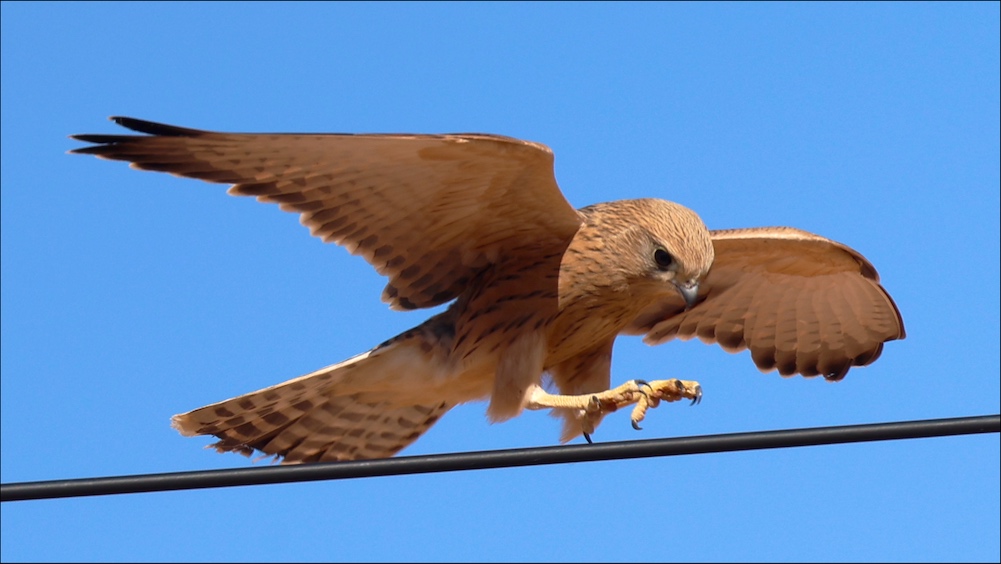 Greater Kestrel landing on wire
Tree- and pole-perching raptors tend to come in big clumps, and on this road we transitioned from pale chanting-goshawks to greater kestrels. Their nests were intermixed with Cape crow nests about every five poles.
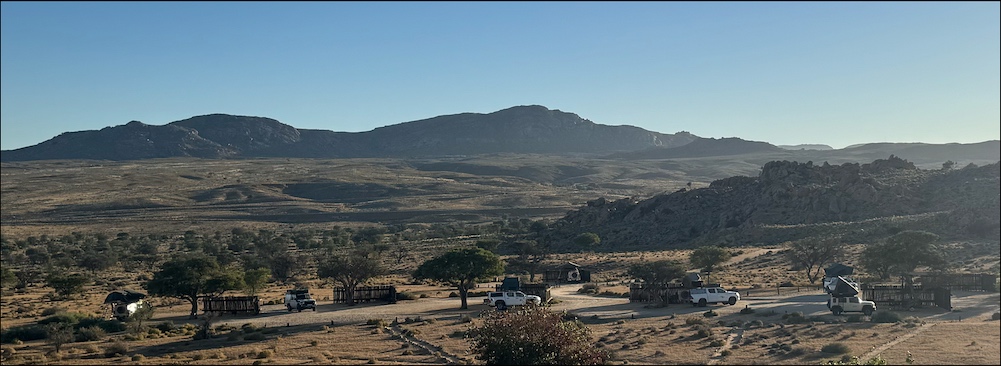 Klein Aus Vista campground
Our next campground was Klein Aus Vista, near Aus and also attached to a nice lodge. We elbowed our way into its supposedly fully booked dinner buffet by agreeing to sit outside in the cool weather. Dinner was tasty, and we spent the next morning hiking and scrambling around the trail network, finding some new birds and having our first Cape fox encounter. We would gladly return here for more exploration and relaxation.
Our final stop in Namibia would be Fish River Canyon in the ǀAi-ǀAis/Richtersveld Transfrontier Park. This is the largest canyon in Africa, stretching about 160 km (100 miles).
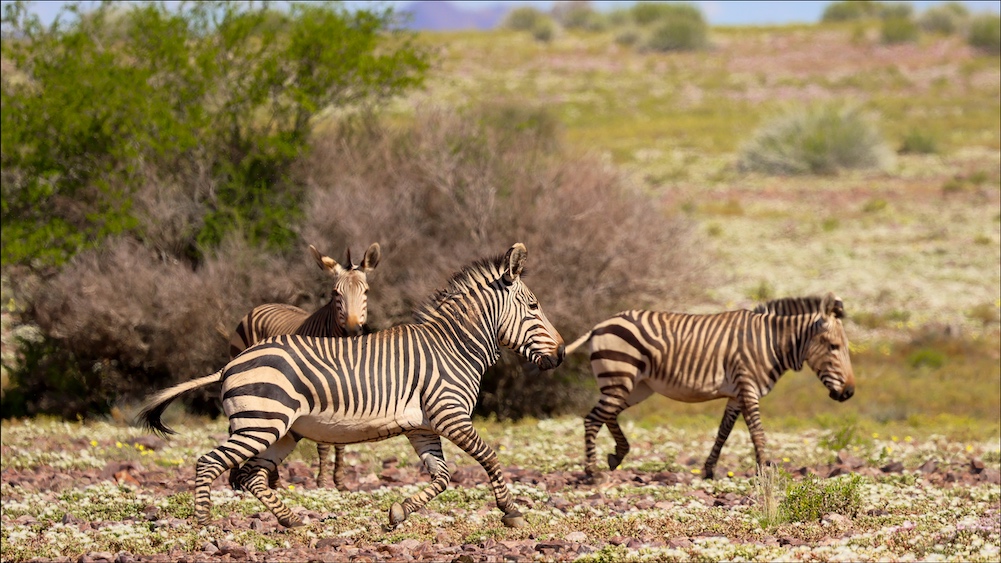 Hartmann’s Mountain Zebra in Fish River Canyon
The canyon was fine, but we didn’t pick the best time of day for great light and viewing, as we had allocated only the afternoon through sunset. We made the best of it by taking an off-road route to a four-wheel-drive area, which we then followed along the canyon rim to the main road. The fields were full of flowering succulents, and we couldn’t drive for more than a kilometer without stopping to stare. And we saw Hartmann’s mountain zebras! Check out their legs and the bold stripes extending all the way to their hooves, and compare them with the plains zebra behind the steenbok.
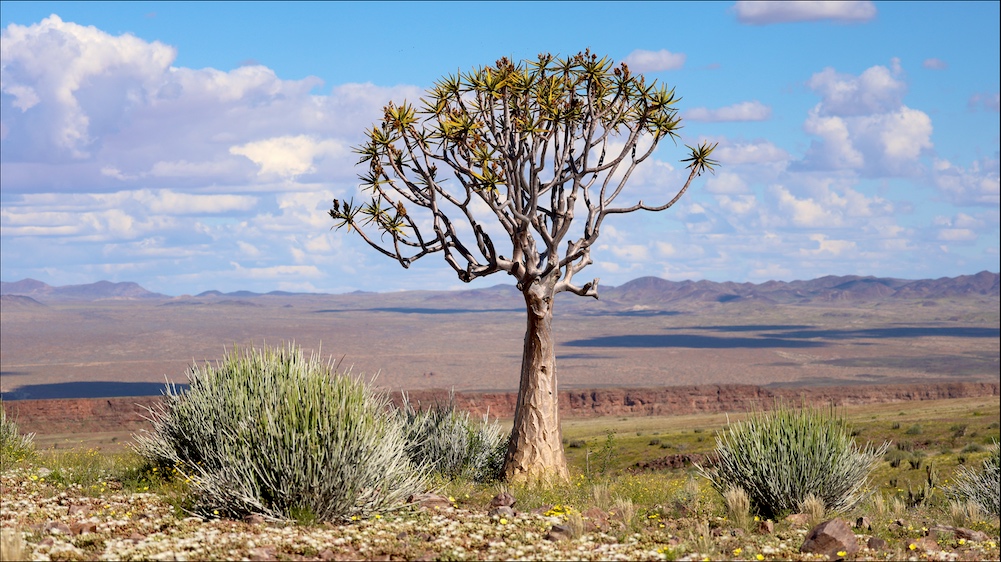 Quiver tree near Fish River Canyon
Ken and I became fascinated with quiver trees and kept seeking out a nice specimen with a good background to photograph; we settled on this one. Like the baobab, it is a tall succulent. Its name comes from the San practice of hollowing out the tubular branches to make quivers for their arrows.
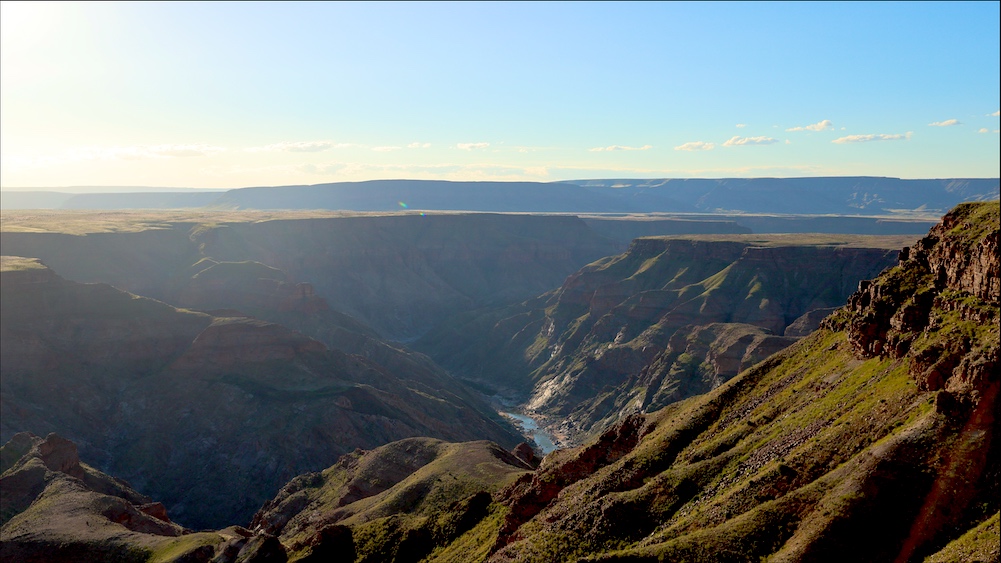 Fish River Canyon
We ended the drive by traversing the canyon’s eastern rim from south to north. The sun kept moving farther into our eyes, and we didn’t want to stay until sunset.
The Hobas camp and restaurant where we stayed was another sad NWR facility, so we dashed out to the Canyon Roadhouse for dinner and were very pleased with the quality and service. We would need to return there in the morning for much-needed diesel.