

Namaqualand and Lambert’s Bay
We made the relatively easy border crossing from Namibia back into South Africa and started our journey south along the country’s west coast.
Our first overnight stop would be at the Skilpad Rest Camp chalet in Namaqua National Park. With no firm plan for exploring the park, we became intrigued by an option to race out to its coastal section and visit a bird hide near an estuary. This would also give us access to a restaurant in the coastal town of Hondeklip Bay. We knew the schedule would be tight and that we would have to drive back to our chalet in the dark, but we set out around 2:15 p.m. to try to make it work.
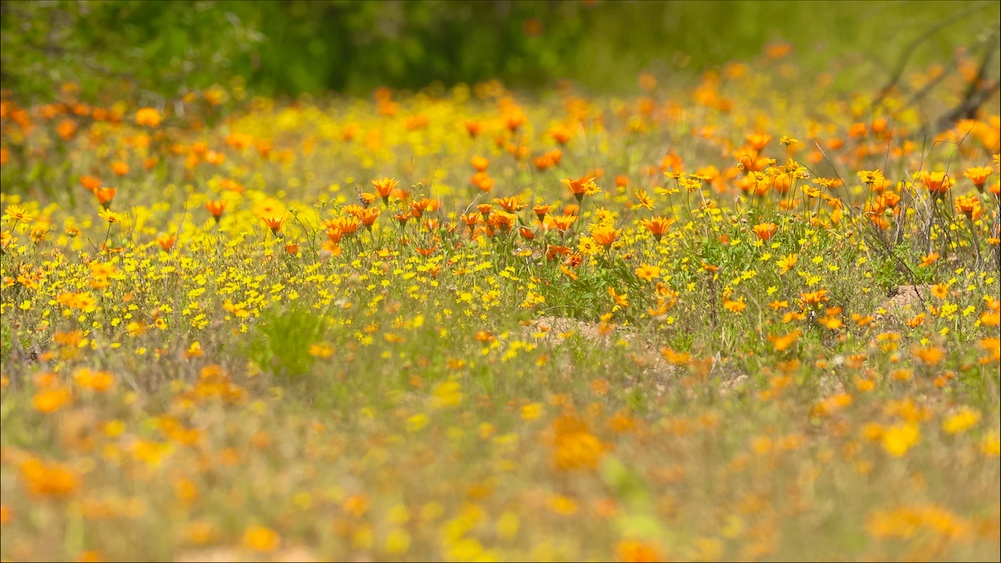 Gazania flower meadow
The Namaqualand region is known for its wildflowers, particularly those in Namaqua National Park. We were two months past peak season, and the park was very quiet, but recent rains had brought a second beautiful bloom, including the Gazania flowers pictured above.
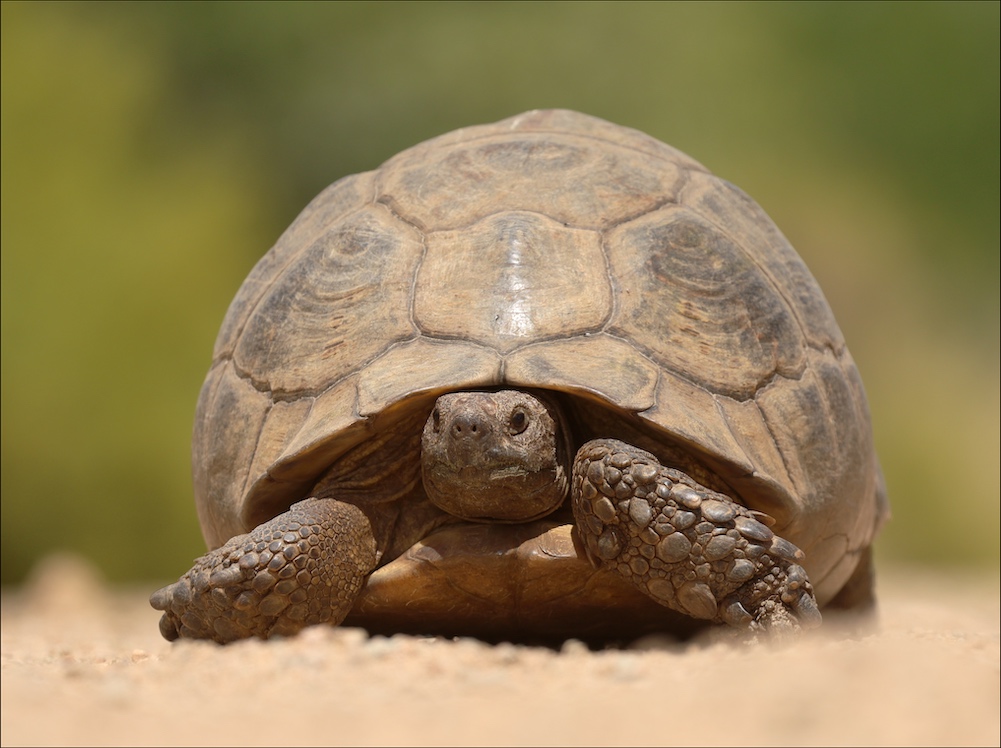 Old Leopard Tortoise
We also started to see lots of tortoises, and of course the most visible ones were trying to cross the road. This leopard tortoise was mature and far larger than the photo implies. The species’ colors tend to fade with age.
Our plan turned out to be too aggressive, and an unanticipated second gate crossing to the coastal portion of the park resulted in a firm “you shall not pass” from the gate guard. We would have had to reach that gate by 3 p.m. in order to visit the coast and return in time.
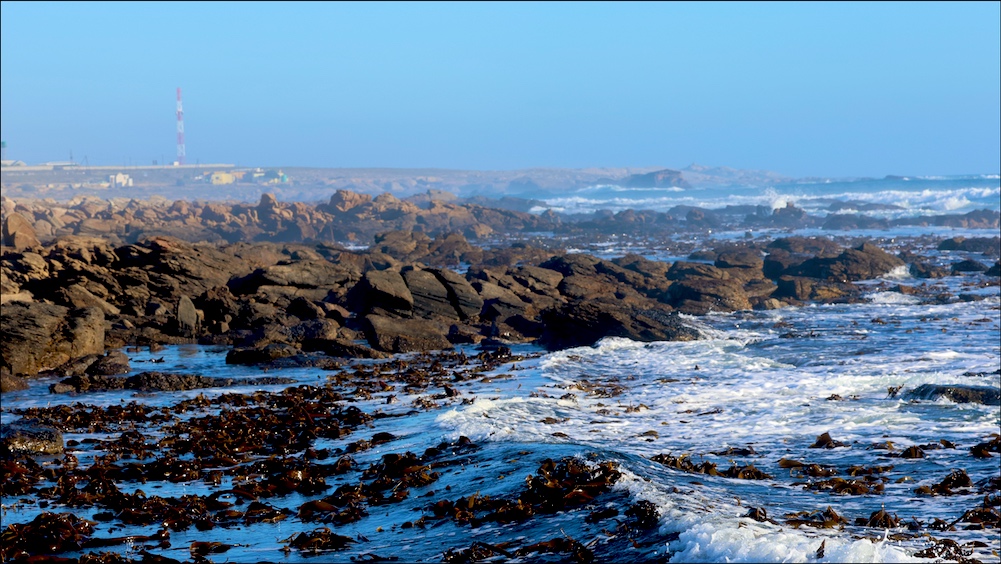 Tide pools near Hondeklip Bay
So we diverted to the original dinner plan, just earlier than expected, and drove to the tiny coastal town of Hondeklip Bay. Our first choice of restaurant had a “closed for 10 days” notice on its chalkboard, and we were directed to the Rooi Spinnekop, which turned out to be great. We both had prawns, calamari, and fish.
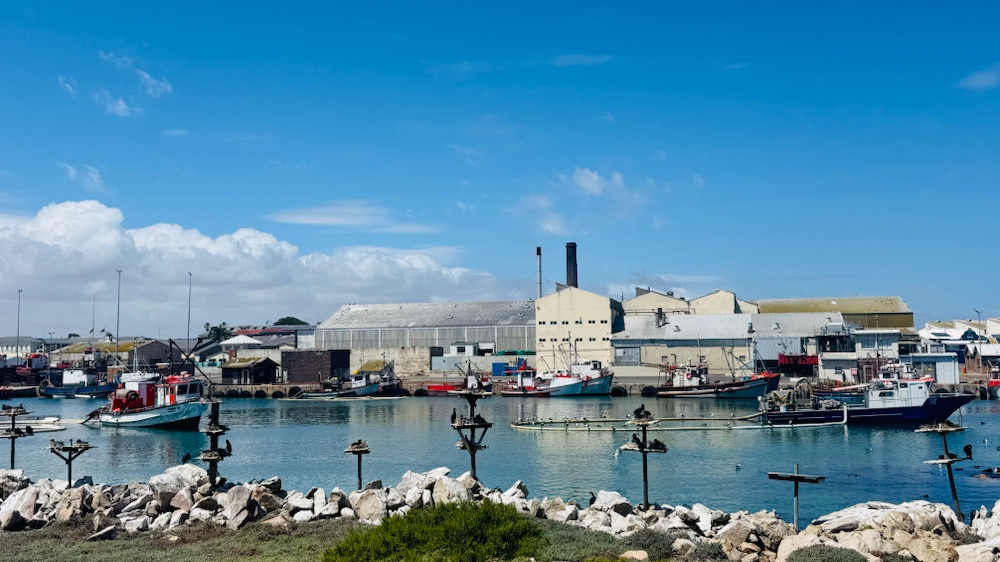 The harbor at Lambert’s Bay
Our next day of travel would take us to Cape Town, but I insisted on a detour to the coastal town of Lambert’s Bay, allowing us to leave the main highway and cruise down the Cape’s west coast.
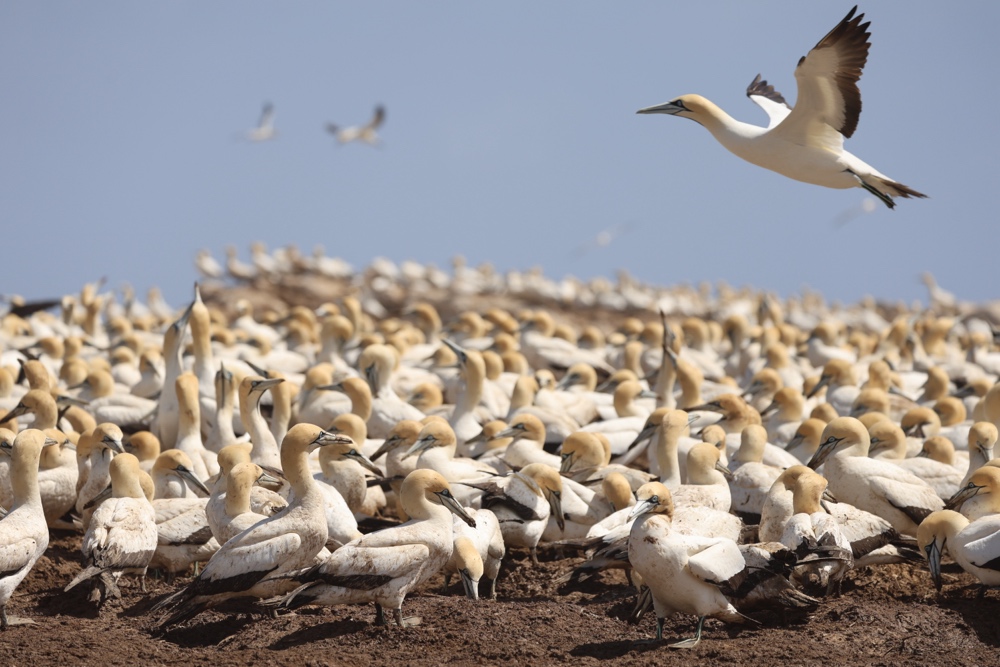 Cape gannet colony with bird landing
This also allowed us to visit Bird Island Nature Reserve and its impressive Cape gannet colony. We wandered the reserve to spot several species of cormorant (great cormorant and Cape cormorant) and gull (Hartlaub’s gull and kelp gull), but the focus was on the beautiful and plentiful gannets.
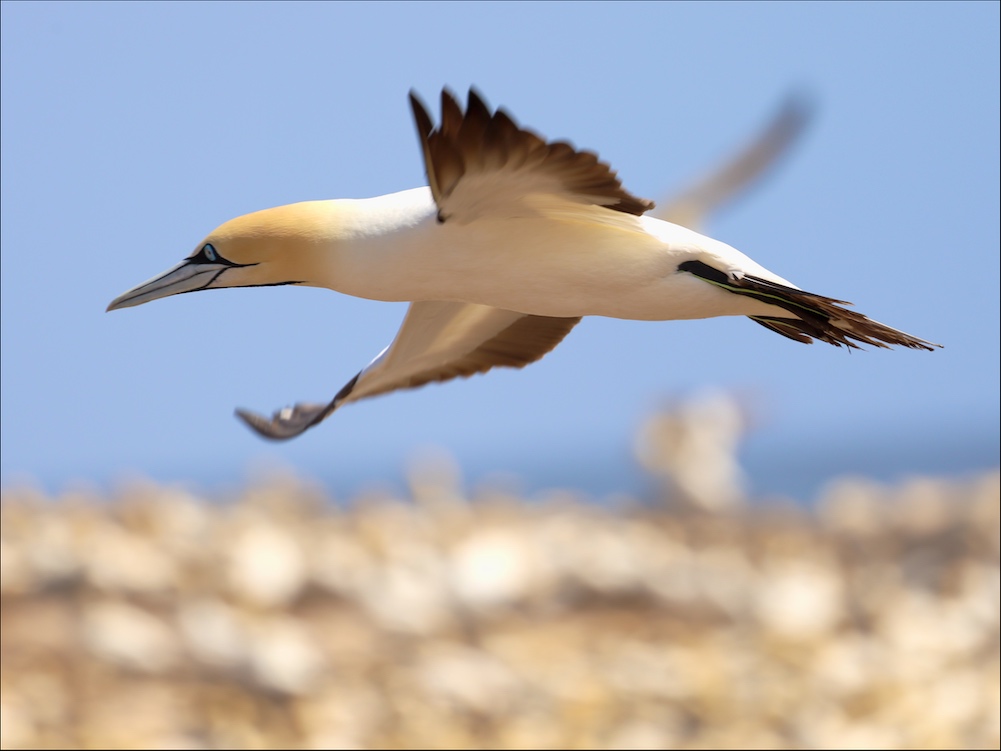 Cape gannet flying over colony
We could see some adults heading out to sea and then plunging into the water for fish (see this award-winning photo featuring a northern gannet), but the real joy was watching them circle the massive colony as they prepared to land near their mates and chicks.