

Into the Drakensberg
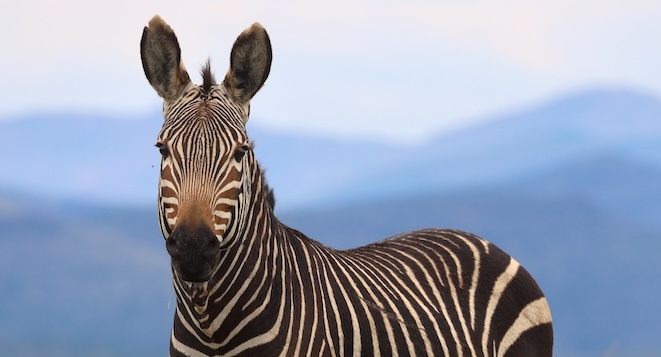
After leaving Mountain Zebra National Park, we continued north into the heart of the Drakensberg toward our farm stay at Pitlochrie.
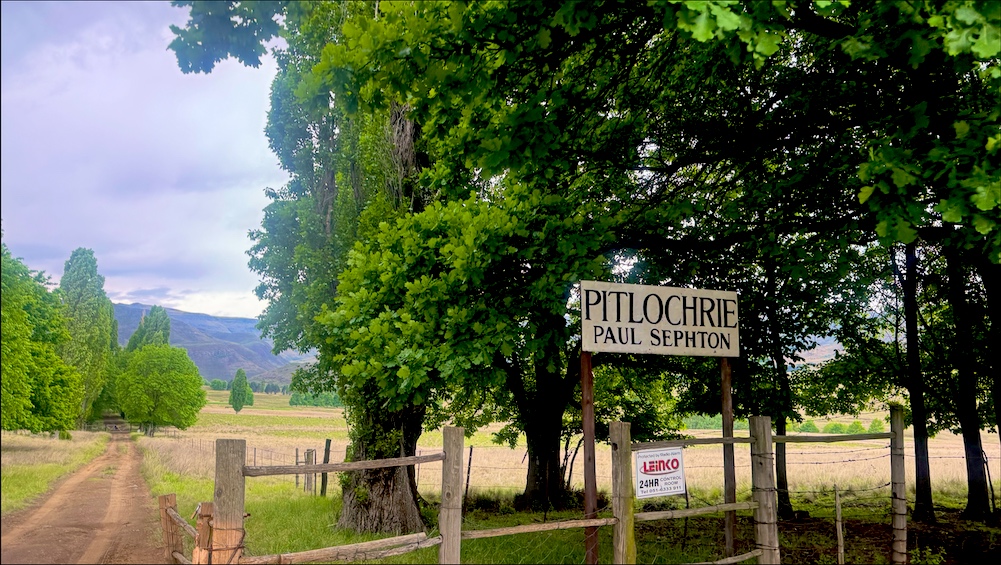 Entrance to Pitlochrie Farm
The entire belt in the southern foothills is farmland, mostly pastures with sheep, cows, and horses, but also some cultivated fields. Joe, the owner, later told us that he can cultivate some of his land, but not for cash crops - just to produce feed for his animals. The farm is over 9,000 acres and runs all the way up the lower slopes of the Drakensberg.
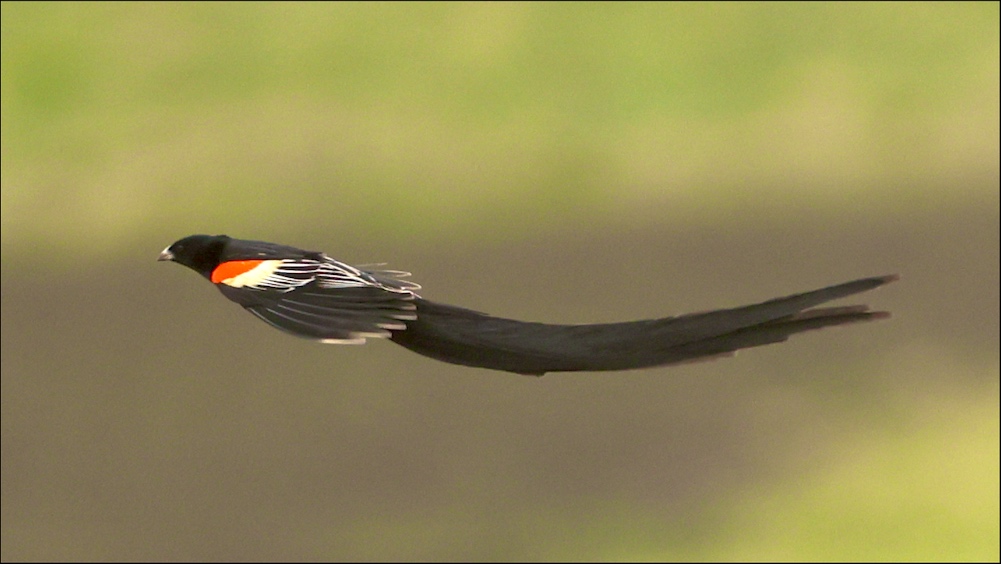 Long-tailed Widowbird in flight
Driving into the farm area, we started to notice a very interesting bird in full breeding plumage: the long-tailed widowbird. For about half a mile, we saw many of them and then… none. We would find more in the following days, but this was an odd concentration, probably because of the perfect mix of elevation and terrain. The males were on full display, alternating between perching on fence posts to pose and flying as slowly as possible. Into the wind, the tail would stretch straight out, but in still air or with the wind, they flew slowly enough that the long tail would drop almost vertically between wingbeats.
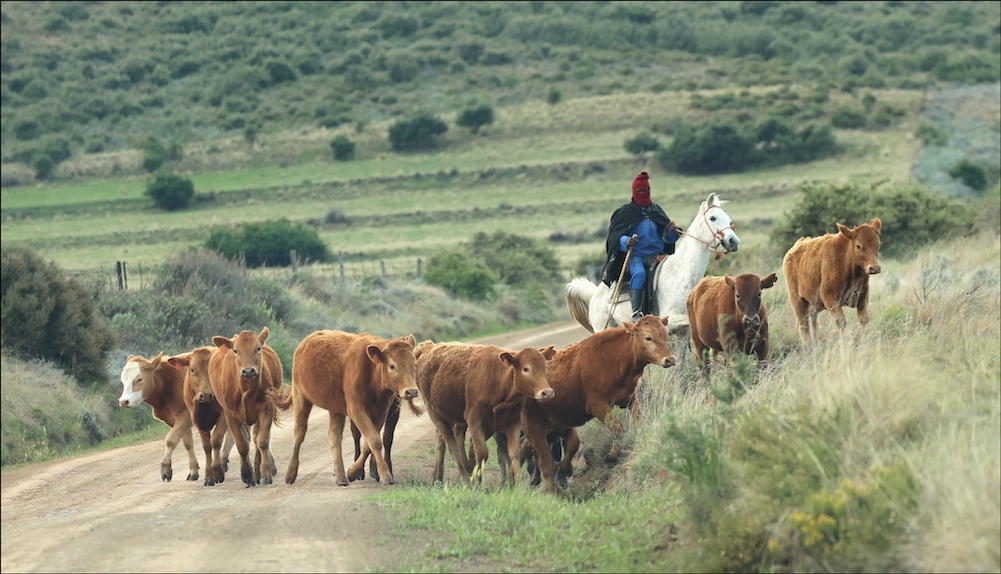 Cowboy in the Drakensberg foothills
Many of the farming crews on the larger farms were on horseback. I know next to nothing about horses, but Ken and I both noticed an unusual gait when the horses moved fast. The cowboys were extremely proficient at rounding up the cattle (and sometimes sheep, though they worked mostly with cattle), moving them off the road when traffic needed to pass.
Our original plan was to stay one night at Pitlochrie, then move into Lesotho to stay at one of the few village camping areas we could find. Communication was tough, though - we had to book with the chief, and Ken couldn’t get the arrangement to work out. After checking into our cottage, we both agreed that a second night there would be a welcome change. We could settle in, spend the next day wandering the passes that bump up against Lesotho, and have a kitchen for cooking two consecutive dinners.
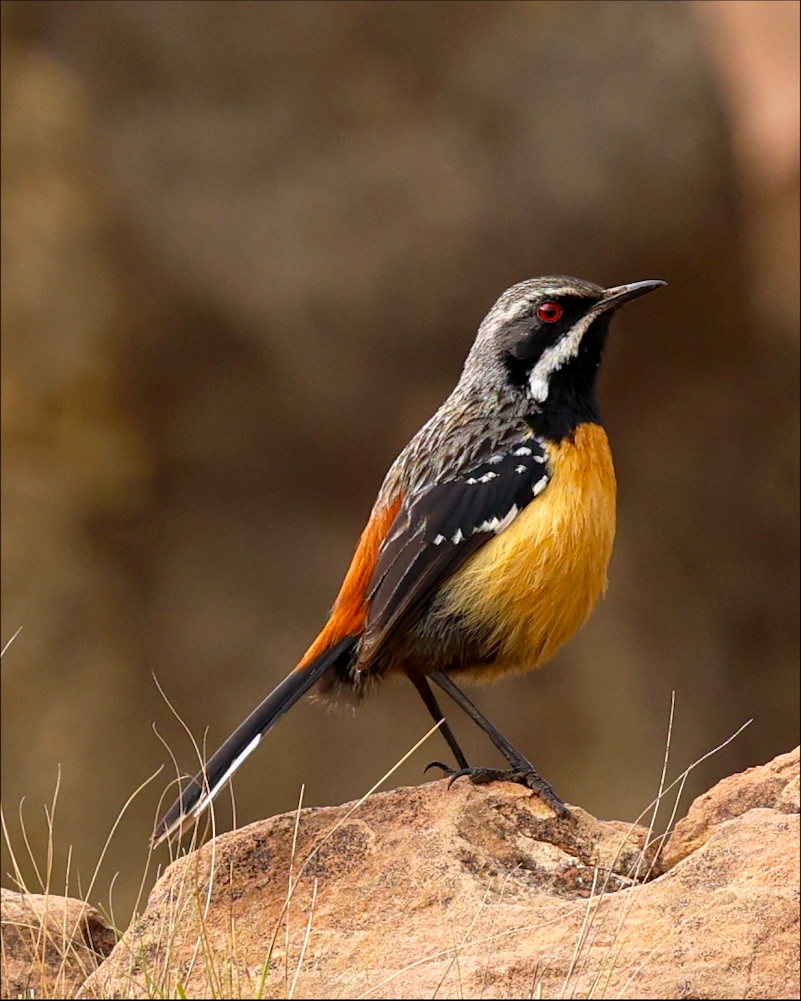 Drakensberg Rockjumper
Our big target for the day was the other rockjumper: the Drakensberg rockjumper. We had found the Cape rockjumper a few days earlier and were well prepared for the likely location of its cousin. Right away, on the rocky slopes near Lundean’s Nek, we found our bird. I was able to scramble around the rocks for a good photo or two.
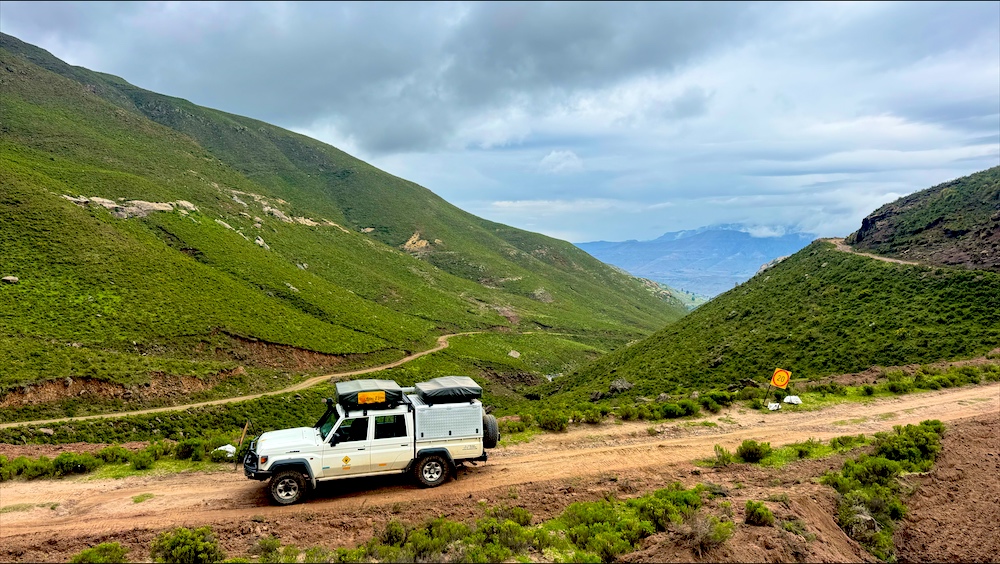 Descending toward Lesotho from Lundean’s Nek
Some context for the elevations in this area: the cottage is at about 5,850 ft, and Lundean’s Nek is just over 7,000 ft. Our climb and descent through the pass didn’t involve that much elevation change; more impressive was the Lesotho range across the Tele River, which climbed to well over 8,500 ft.
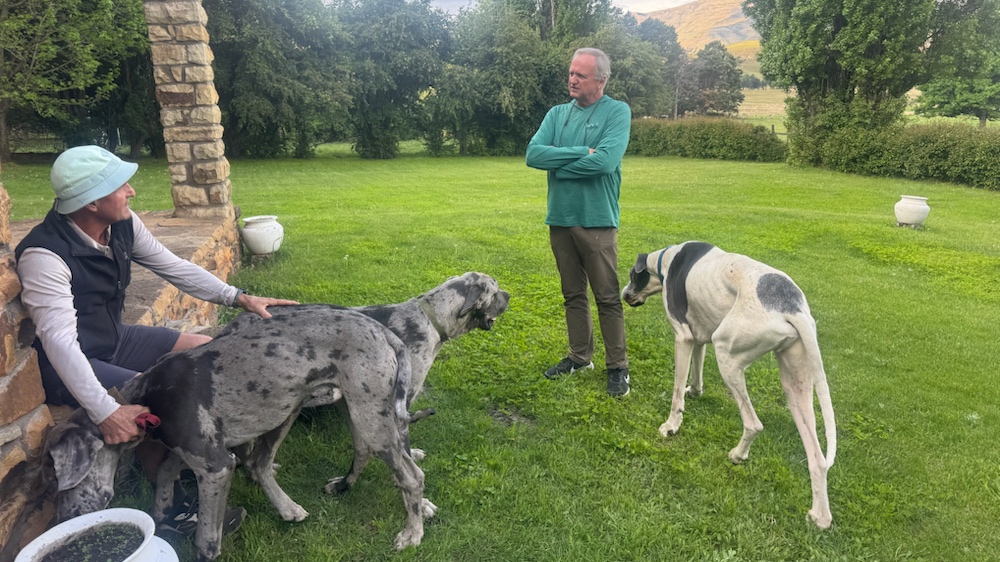 Farm owner Joe introduces us to his three Great Dane boys
Another bonus of staying two nights was spending more time with Joe on the middle night. He introduced us to his three Great Dane boys and gave us tours of the two larger houses he also rents. If we ever return with six to twelve people, we know exactly where we’d want to stay.
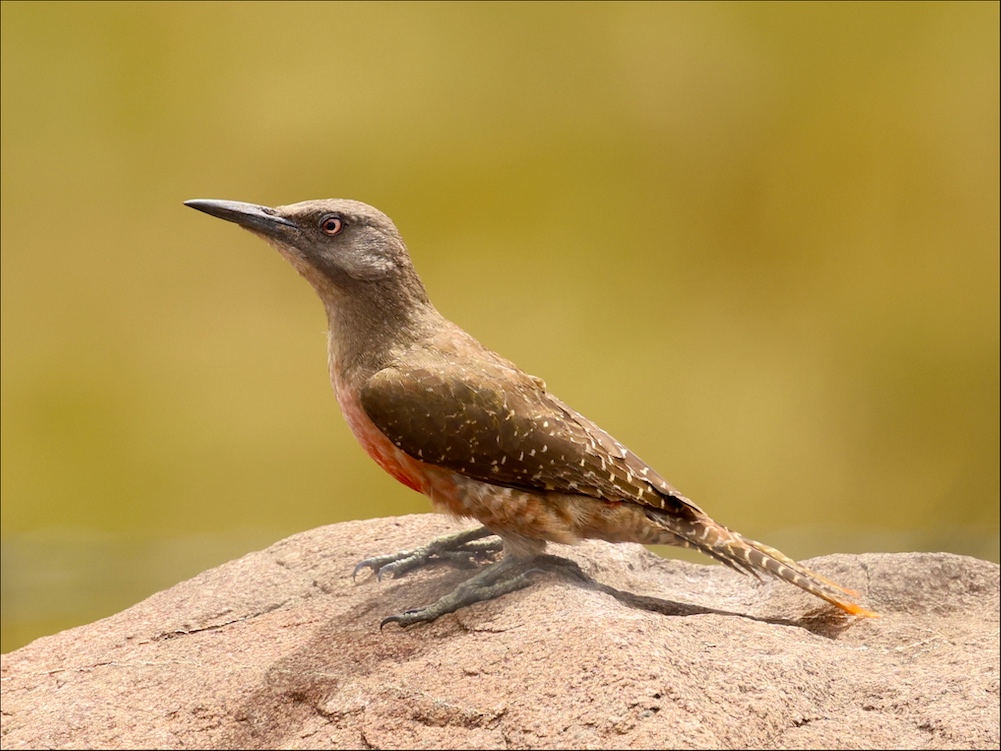 Ground Woodpecker
The next morning, we departed Pitlochrie to circle around the southeastern border of Lesotho via Naude’s Nek. Early in our climb, we spotted a ground woodpecker that hung around long enough for a great photo. It was a relief to find this bird, as I had begun to suspect that what we thought was a ground woodpecker in Rooi-Els might actually have been a thrush. It was far away, my photo wasn’t that great, and the other couple had pointed it out to us. It was nice to have complete confidence that we’d seen the bird. Yes, it is a woodpecker, and yes, it spends its time jumping around rocks and finding insects on the ground to eat.
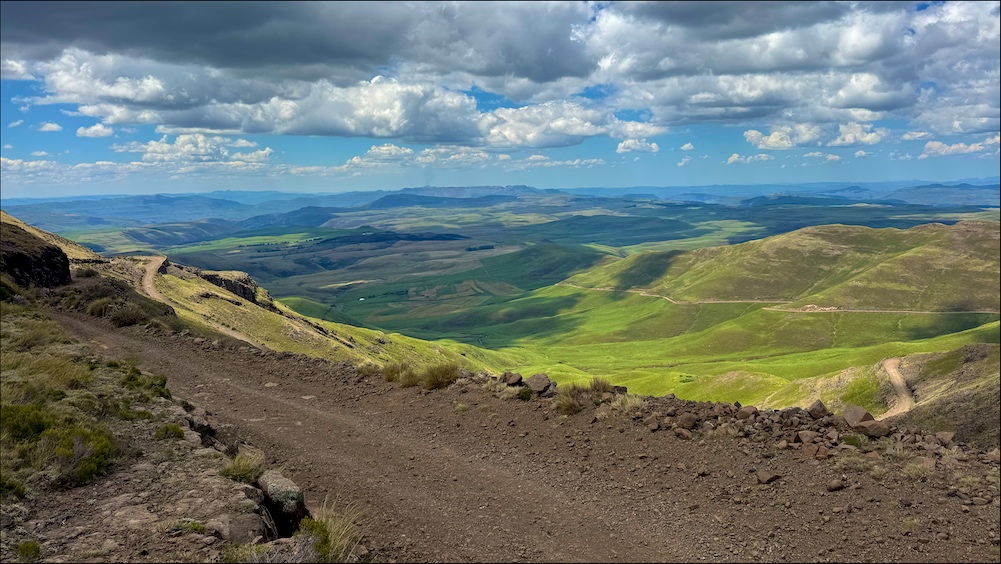 Descending from Naude’s Nek
More farmland and blue skies awaited us as we descended from Naude’s Nek at about 8,200 ft. The road was slow going but hardly a technically challenging four-wheel-drive route. We just had to watch for herd animals and other vehicles.
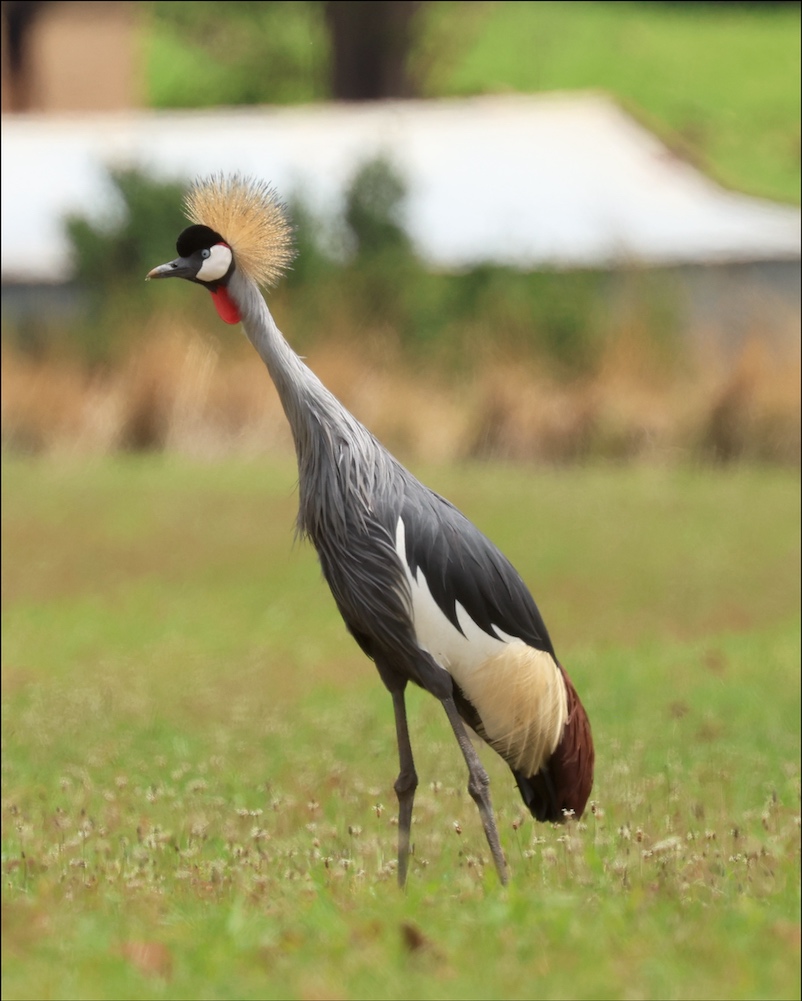 Gray Crowned-Crane
We’d already seen the sought-after gray crowned crane, but I did not have any good photos. Ken spotted a pair in a cultivated field without livestock, which was where we usually found them. I was able to walk up the road, round a corner, and scoot up to the fence they were approaching to take some nice photos. Beautiful birds.
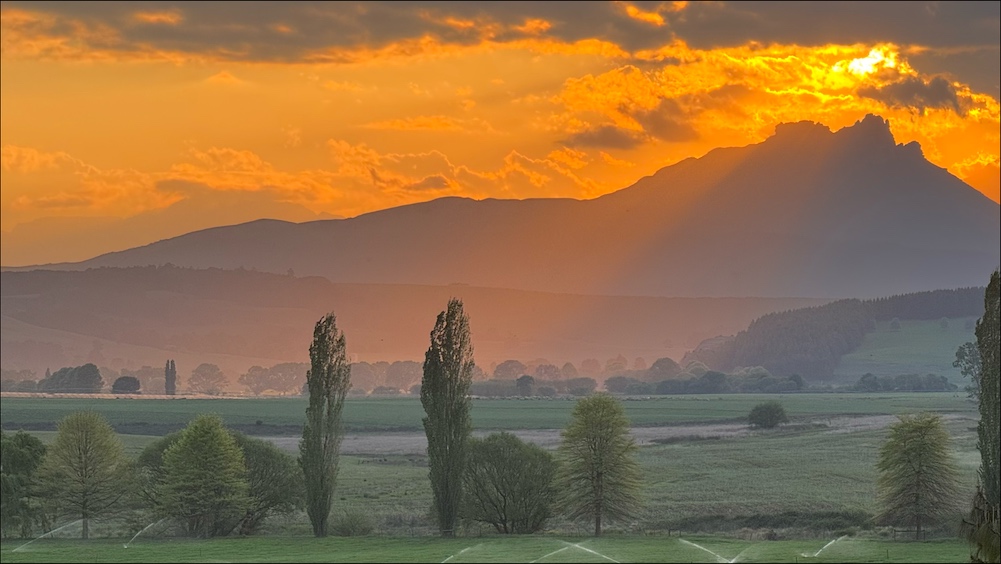 Sunset view at Khotso
We made our way to the Underberg area and our next farm stay at Khotso Horse Trails. It was another beautiful farm, with a more active group of visitors in the campground. We had opted for their family-style dinner and joined four Dutch guests and three staff members or volunteers for a nice braai. Our campsite was next to a small cascading creek, which provided some nice white noise for our final tent stay of the trip.
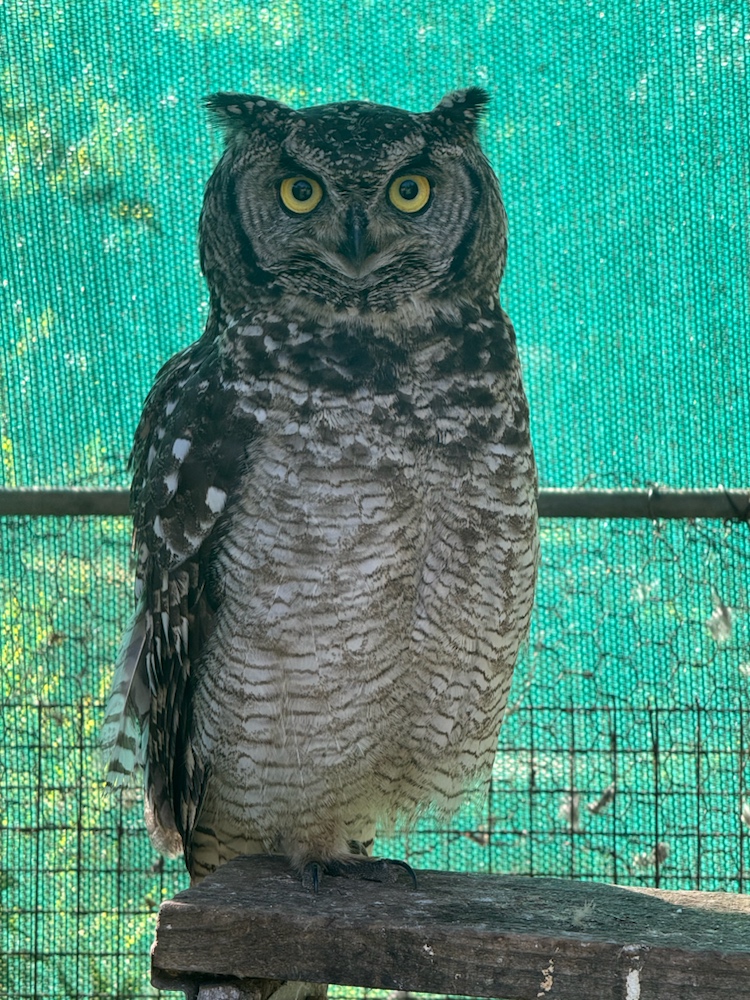 Spotted Eagle-Owl female with broken wing
Owner Raymond is quite a character - adventure racer, farm and lodge owner, overlander, and owl rehabilitator. He’s been working with owls since his childhood in Zimbabwe, and on the morning of our departure, he took us into his rehabilitation area. There, we met a young female with a broken wing and a few other spotted eagle-owls. He was keeping two juveniles wild for eventual release.
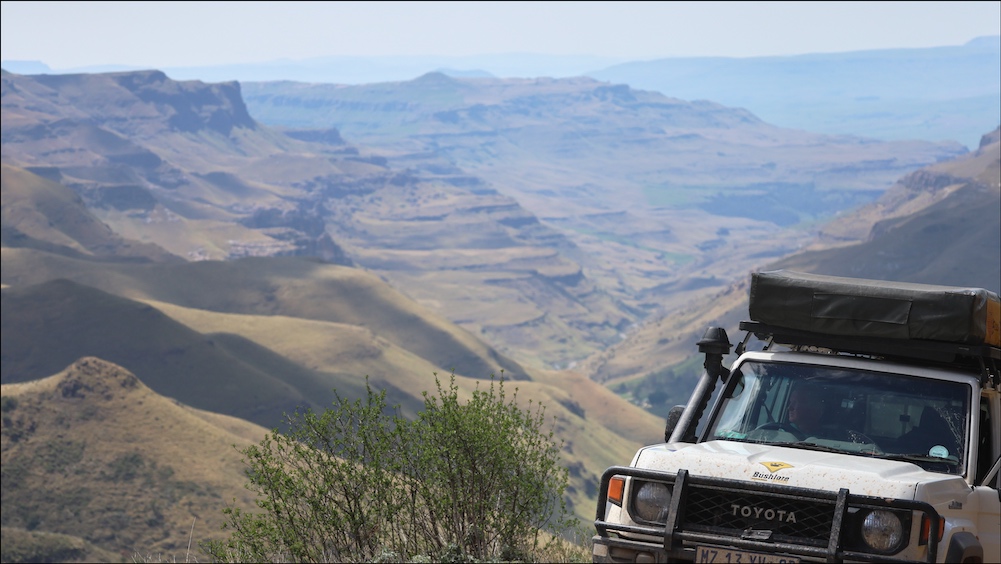 Climbing Sani Pass to Lesotho
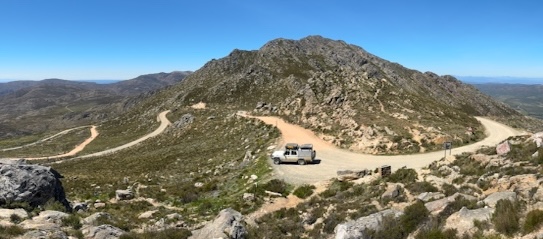
Our next adventure would be climbing the Drakensberg at Sani Pass, taking us up to about 9,400 ft on a challenging, rocky four-wheel-drive trail. We had to take it slowly but enjoyed pulling over from time to time for photos and birding. We found more rockjumpers but didn’t have good photo opportunities.
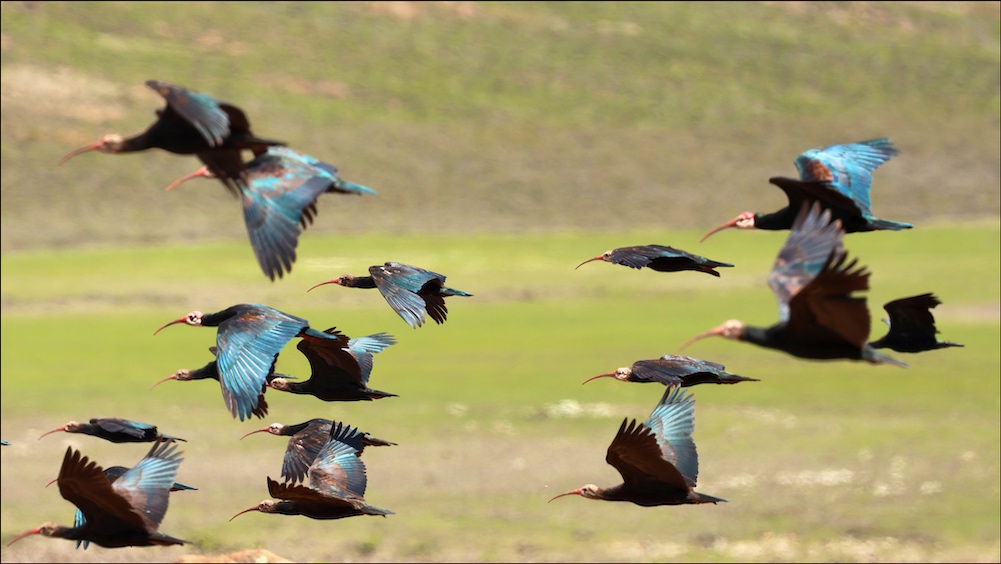 Southern Bald Ibis flock at Sani Top
Almost immediately after climbing to the top and passing through Lesotho border control, we spotted a flock of birds that made both of us do a double take. They took off almost immediately, but I managed to get a few photos. Only after we zoomed in did I realize that we had stumbled upon southern bald ibises, definitely the coolest-looking ibises around.
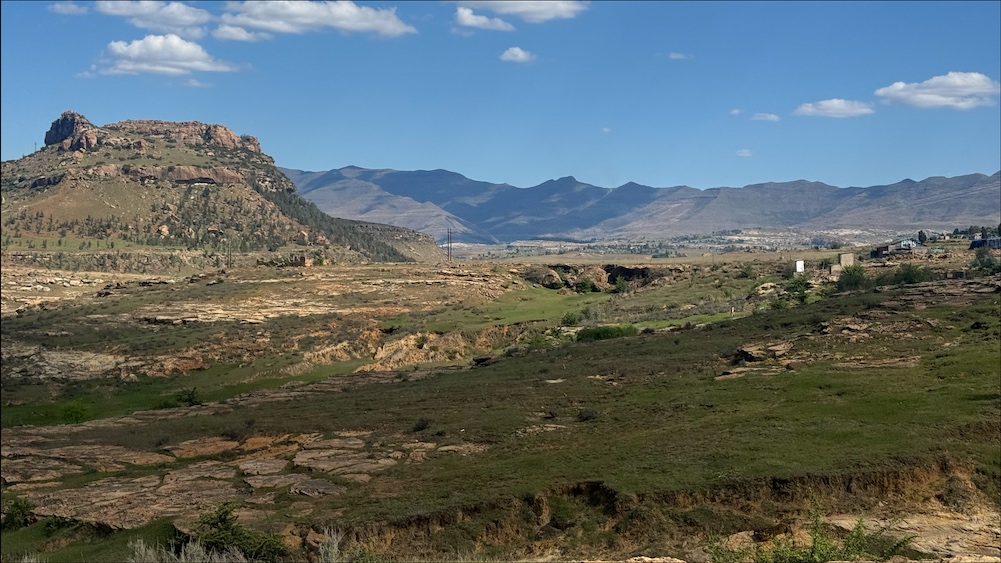 Rambling through mountainous Lesotho
Let’s talk about Lesotho! This is one of only three landlocked countries in the world surrounded by a single other country; the other two are San Marino and Vatican City. The mountains forming much of its outer border are massive and intimidating. In fact, Lesotho’s lowest point, at about 4,600 ft, is higher than that of any other country. Lesotho was also one of the inspirations for Wakanda in the 2018 film Black Panther. Coming through Sani Pass emphasizes the country’s fortress-like quality, though it is certainly the most dramatic entry route. We traversed the country from Sani Pass in the east to Butha-Buthe in the northwest, where the transition back to South Africa was much less dramatic but still beautiful.
We passed mostly farming villages, along with the Letšeng diamond mine and the Afriski resort. The road climbed above 10,000 ft before eventually dropping to between 5,000 and 6,000 ft. The views were beautiful throughout, but we don’t feel like we missed much by not overnighting in the country.