

The Karoo of South Africa
We left the rolling hills of the coastal farming belt in the Western Cape to begin winding through the mountain passes of the Great Escarpment and the ranges leading to it.
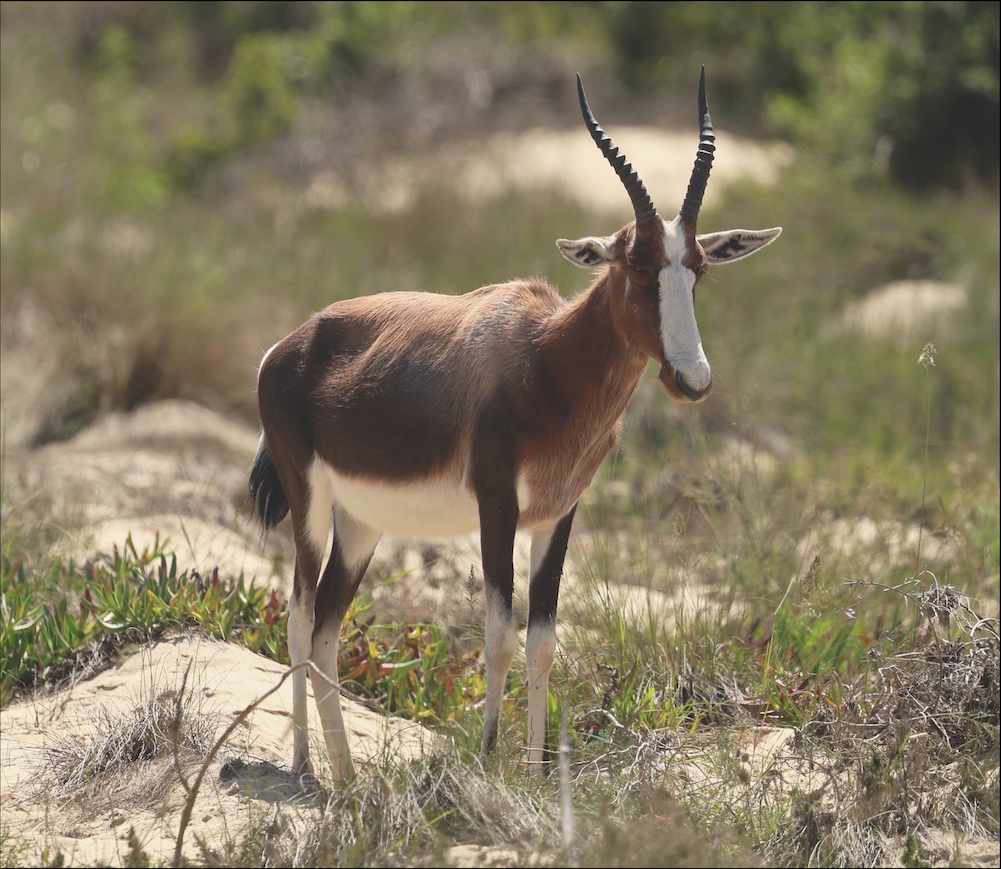 Bontebok
Before climbing into the Klein Karoo, we stopped at Bontebok National Park. This is a small park, easily covered in a few hours, and was our best shot at seeing the bontebok, which was nearly driven to extinction. In 1961, 61 animals were relocated to the park’s current location, and all living bontebok are descendants of this small population. We saw some Cape mountain zebras here as well, but I’ll save photos of those beautiful creatures for a future post.
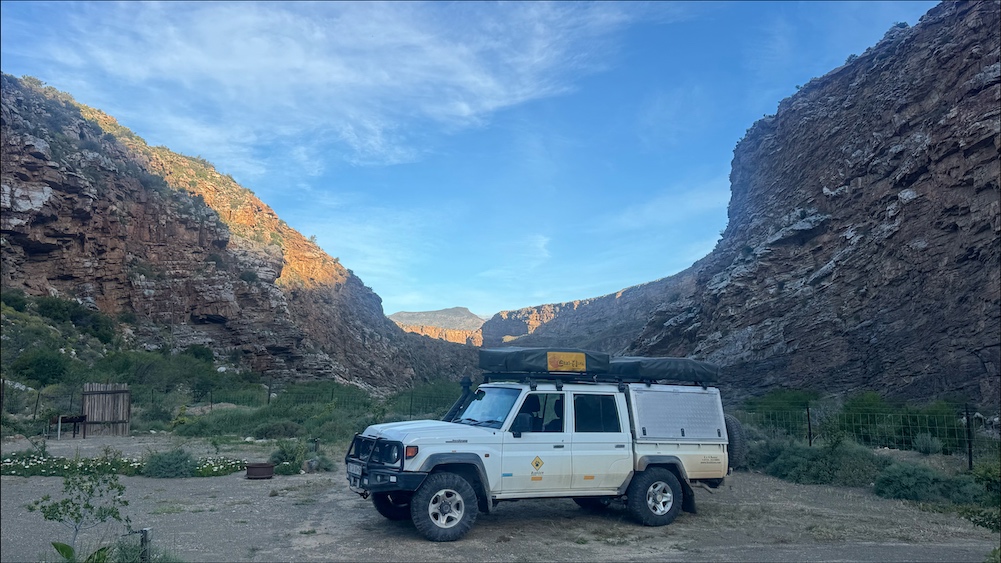 Camp at Karos
We made our way into the Swartberg mountains for our camping spot for the night at the very remote Karos Avontuurplaas. The small camp is situated below Floriskraal Dam along the Buffels River in a beautiful canyon. The dam was full and spilling water, so a four-wheel-drive exit through the canyon drainage wasn’t an option for us.
The next morning, we had a nice long chat with an adventurous South African couple and did some birding along the river. We spotted our first Namaqua warbler.
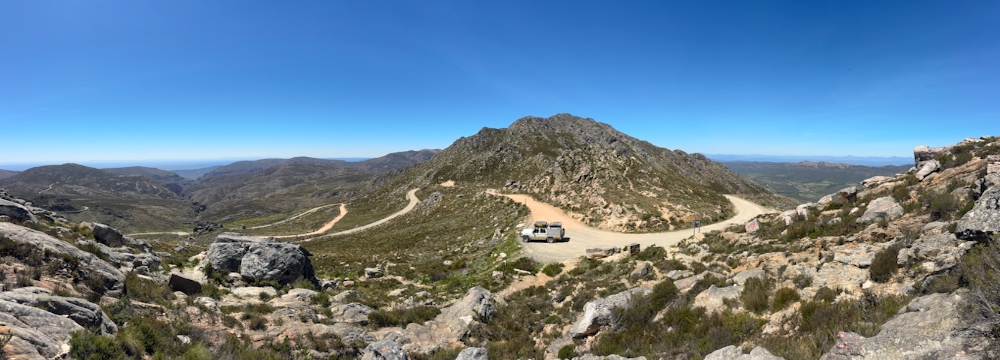 Swartberg Pass
We backtracked a bit to make our way to Swartberg Pass. We were now firmly in the Klein Karoo, south of the Swartberg range that separates it from the Great Karoo. The rock strata and folds were among the most contorted I’ve ever seen. Usually, these strata appear as fairly straight lines, with angular changes where faults or uplift occurred. Here, they often curved like serpents.
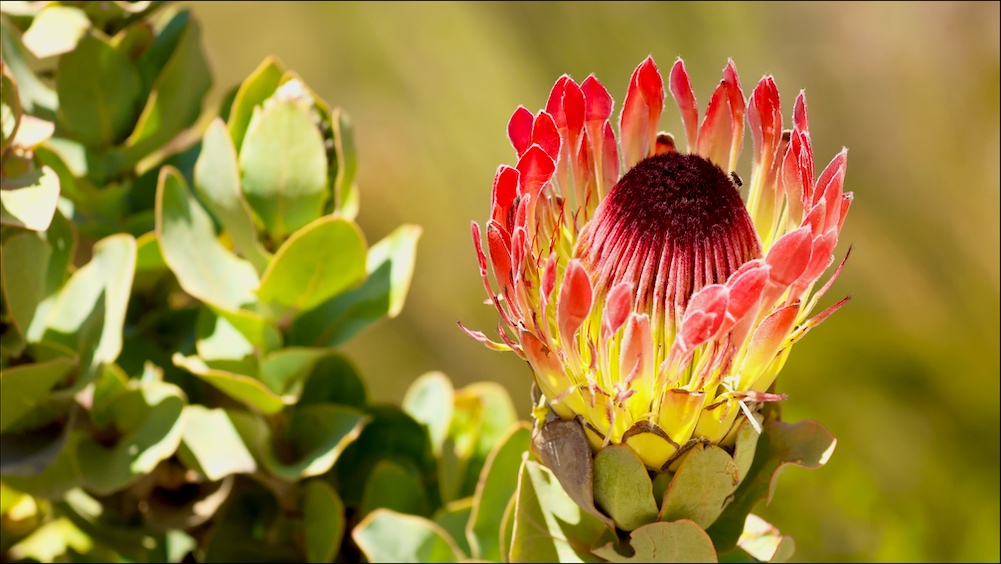 Protea flower
Periodically, we came across large fields of protea flowers, and we’d stop to search for sunbirds and the endemic protea canary; sadly, we never found the canary. Since Namaqualand, we’ve been spending more time looking at flowers, taking snapshots, and identifying them with iNaturalist.
The Baviaanskloof (Valley of the Baboons) would be our next rest stop as we moved into a cottage at Verlorenrivier, situated right above the Baviaanskloof River. This narrow and scenic valley is a destination for four-wheel-drive overlanders because of the rugged trail that exits the valley to the east.
We knew in advance that we would not be able to take this route out because of severe damage from flooding earlier that year (a recurring theme on this trip!) and were fully prepared to backtrack out of the valley before continuing to our next destination. I sent a WhatsApp message to Doringkloof Farm and Camp to see if we could take their Bosrug route out to the south. The woman who replied put me in touch with her son, Ruan, who said the only way out was to Kareedouw via the Rus en Vrede farm. I had follow-up questions (like, “Who do we pay?” and “How long does it take?”) but got no reply.
Without more information, we were still resigned to backtracking, but the owner of the farm where we were staying confirmed that we could exit that way. He also told us that Ruan was right there at the farm, visiting his son. We intercepted him, got specific directions using the map, and set off for the Rus en Vrede farm.
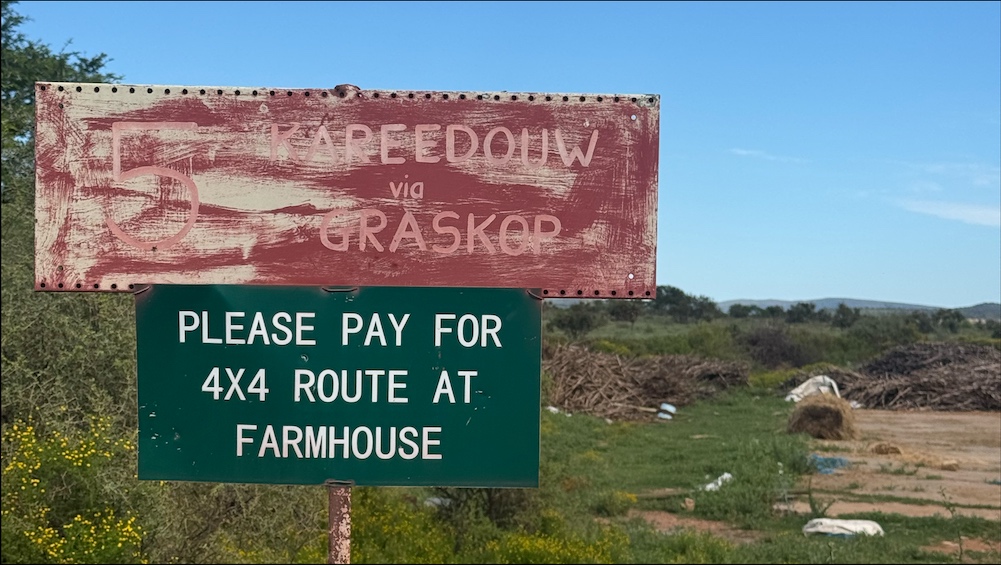 Start of Kareedouw 4x4 route from Rus en Vrede farm
We found the farm about 25 km down the valley, pulled in, and eventually found Chris, the owner. He sat down with me to collect payment and review my planned route in Gaia GPS. It matched his plan, and he added some helpful details: “You’ll go through the gate with the rain gauge” and “When you see a gate in a large open meadow on a ridge, skip the gate and just drive through the meadow to find the road on the other side.”
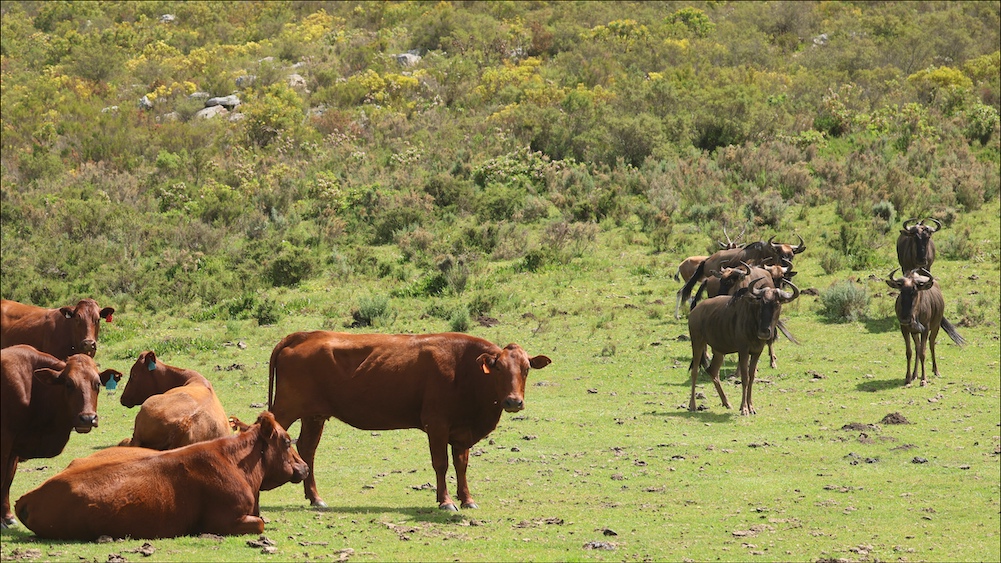 Cows, wildebeest, and springbok
At that particular meadow, we saw an interesting group: some black wildebeest, a bachelor springbok, and a group of cows all hanging out together. Wildebeest often seem to look for company like this, but we were surprised to see the springbok (he’s hiding behind the wildebeest).
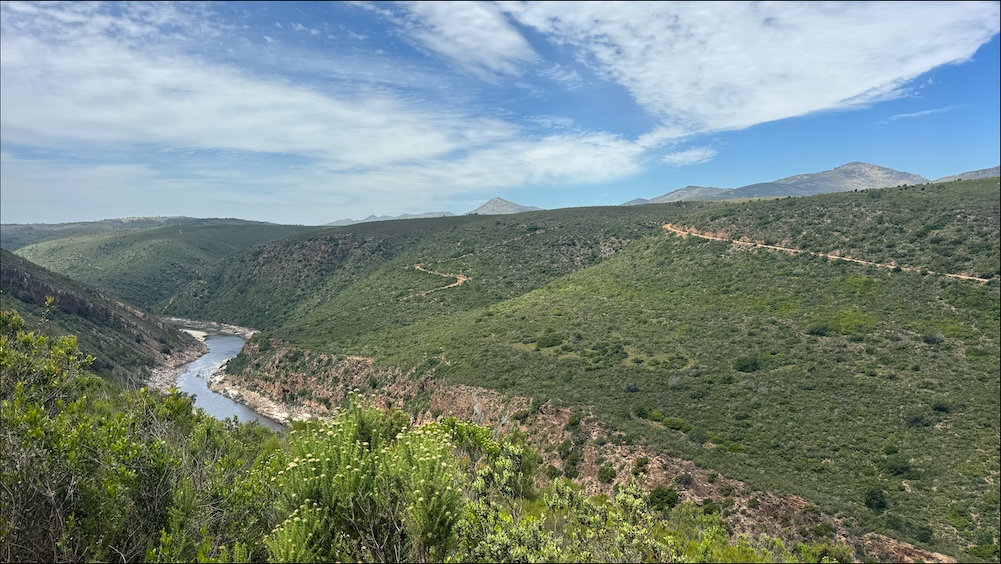 Coming out of Baviaanskloof
Farmer Chris estimated that our drive would take four to seven hours. I drove the first half, then let Ken take the helm and share in the switchback climbs and descents. It was scenic and not too challenging, and we made it through in about three and a half hours. We reached the Indian Ocean coast one last time before turning north toward the Drakensberg mountains.