

Swamp Stop and Riverdance, Botswana and Namibia
After exiting the CKGR we spent a pleasant night in Ghanzi before moving north to the west side of the Okavango Delta in Botswana.
Ghanzi was a nice town and we stayed at the Symponia Guesthouse, another upscale camping option for us with a nice pool, showers, and a dinner option in the lodge. Highly recommended. The town was less touristy but still very vibrant with seemingly more young professionals about. We even saw joggers and walkers about, doing so for exercise and not because they need to walk five miles into town for goods.
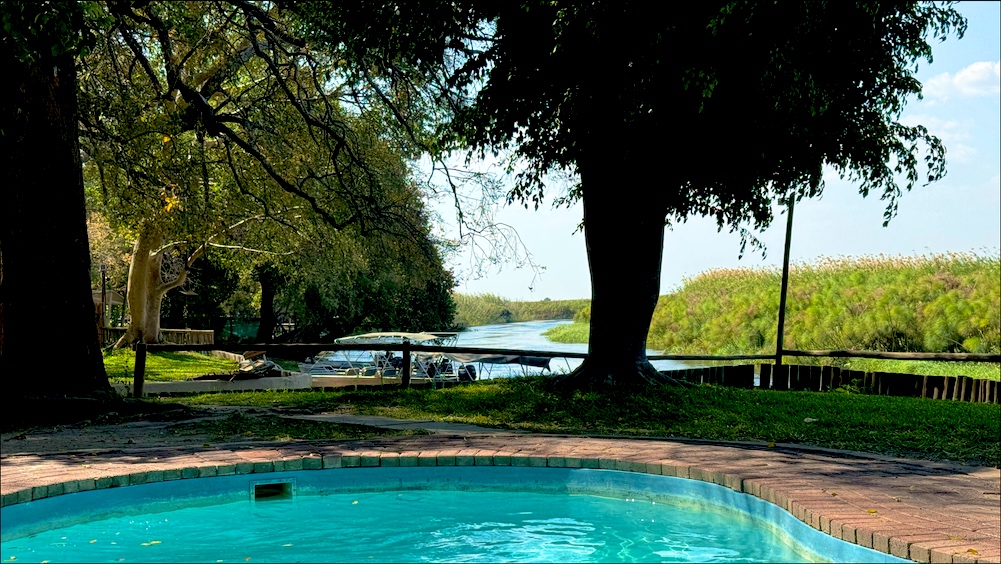 Pool at Okavango River at Swamp Stop
Ken warned me that Swamp Stop might be a lower-budget and more crowded stop. It wasn’t as polished as other similar places but it was fine. Our camping spot was very occluded with trees making Starlink a no-go, but thankfully the retaurant area had its own Starlink with very high bandwidth. This allowed me to do a 10pm-midnight call for school without being a nuisance in the campground.
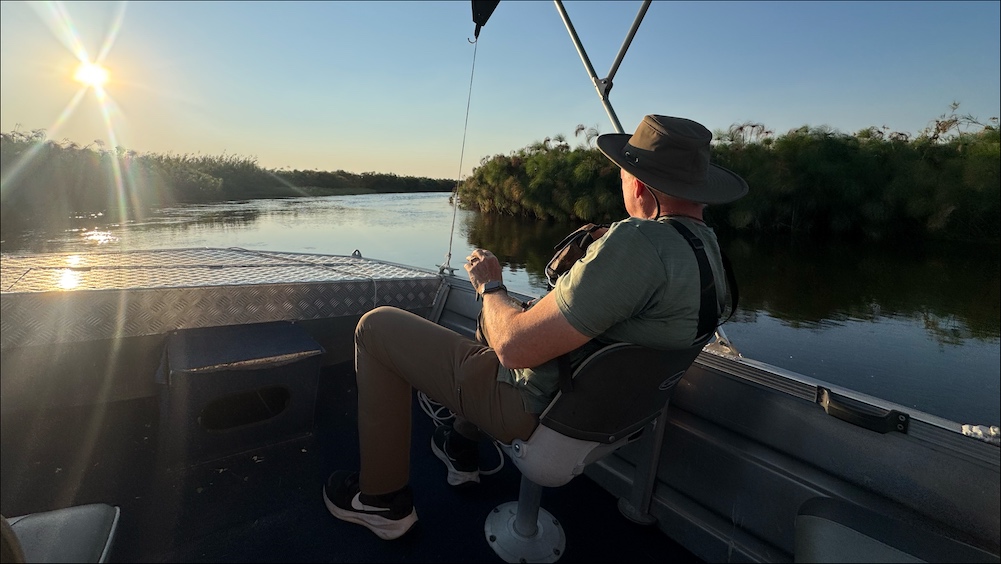 Starting our Okavango cruise at Swamp Stop
We always try to book a river cruise when we can and we were both excited to explore a different part of the delta. So far we’ve been in the interior (and island lodge), the northeast corner (Moremi and NG-32), the end of the delta near Maun, and now the (roughly) start of the delta as it is just two channels preparing to spread into the fractal-like fingers.
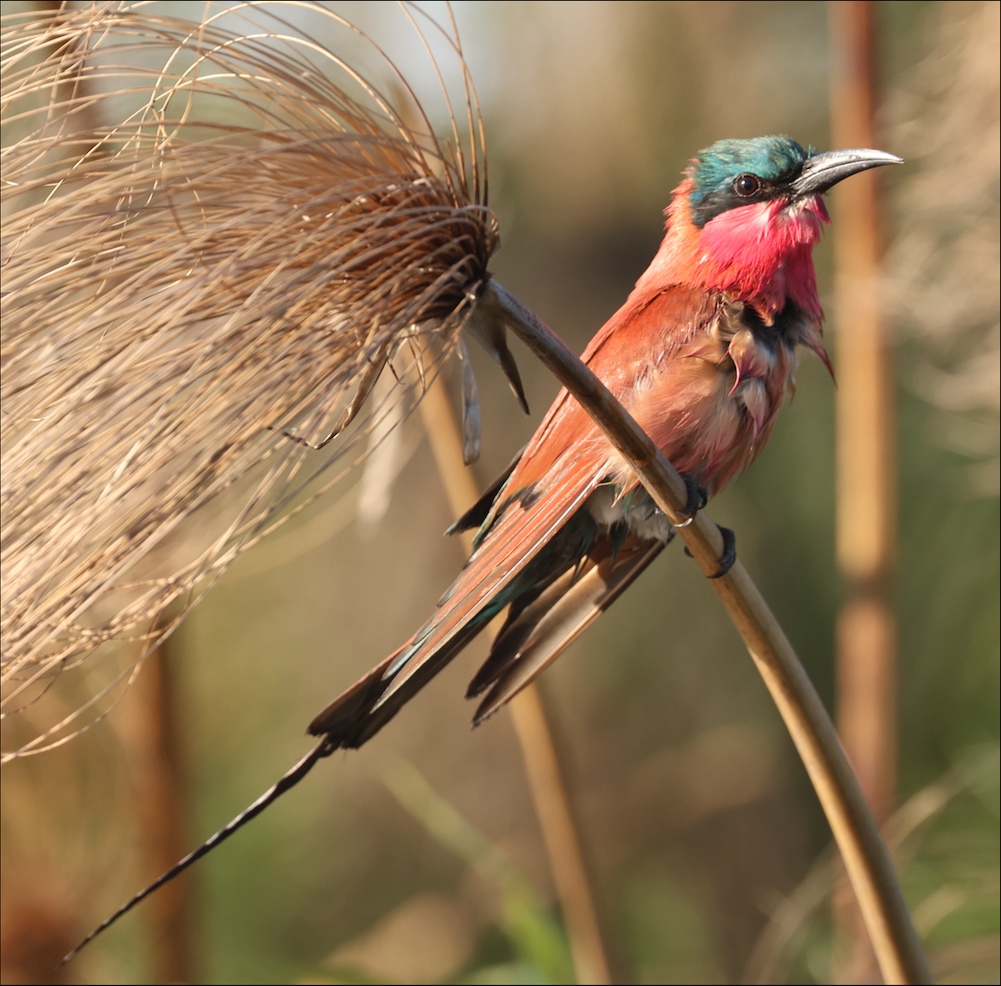 Southern Carmine Bee-eater
We had the usual cast of delta birds, with a new lifer sighting of the little bittern and a decent photo of the carmine bee-easter.
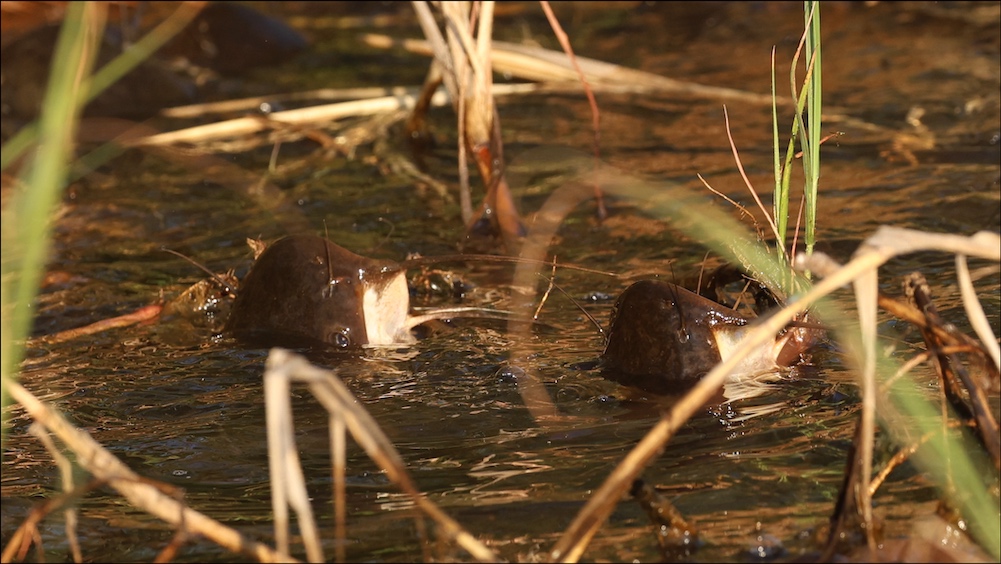 African Sharptooth Catfish
Ken and I are both intrigued about the prospect of fishing the delta for the prized African tigerfish (hydrocynus vittatus), and we were fortunate to get a demonstration of an activity known to draw in tigerfish: African sharptooth catfish group-feeding on small baitfish in the reeds. We saw hundreds, but only after first hearing them clapping or snapping shut their mouths as they came up from underneath to feed.
It was a short drive from Swamp Stop to the Namibian border post into the Bwabwata National Park. Might be a good time to look at a map of southern Africa and see the long Namibian panhandle that stretches across the north border of Botswana until nearly Victoria Falls. We crossed this border (easy one) and did a bit of exploration of the park before moving north to Riverdance, which is across the Okavango River from Angola.
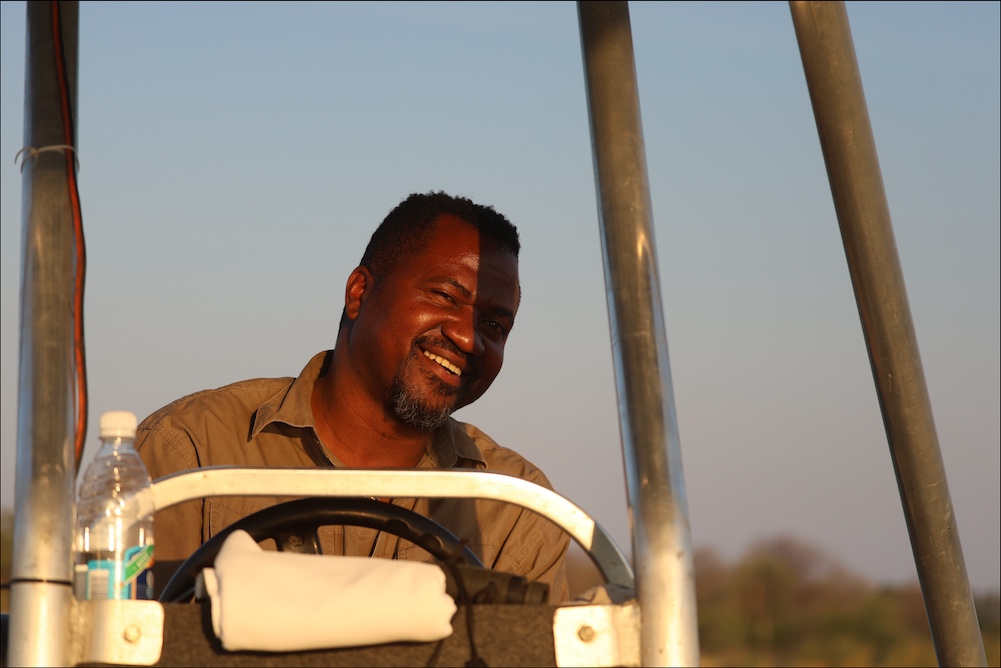 Our guide Austin over-delivered on birds
I expected more of the same on our river cruise at Riverdance but it was quite different. The water flowed faster, there were rocky narrows and rapids, and both sides of the river were populated by villagers using the river as part of their daily lives. Austin would be our main guide, accompanied by a new guide trainee.
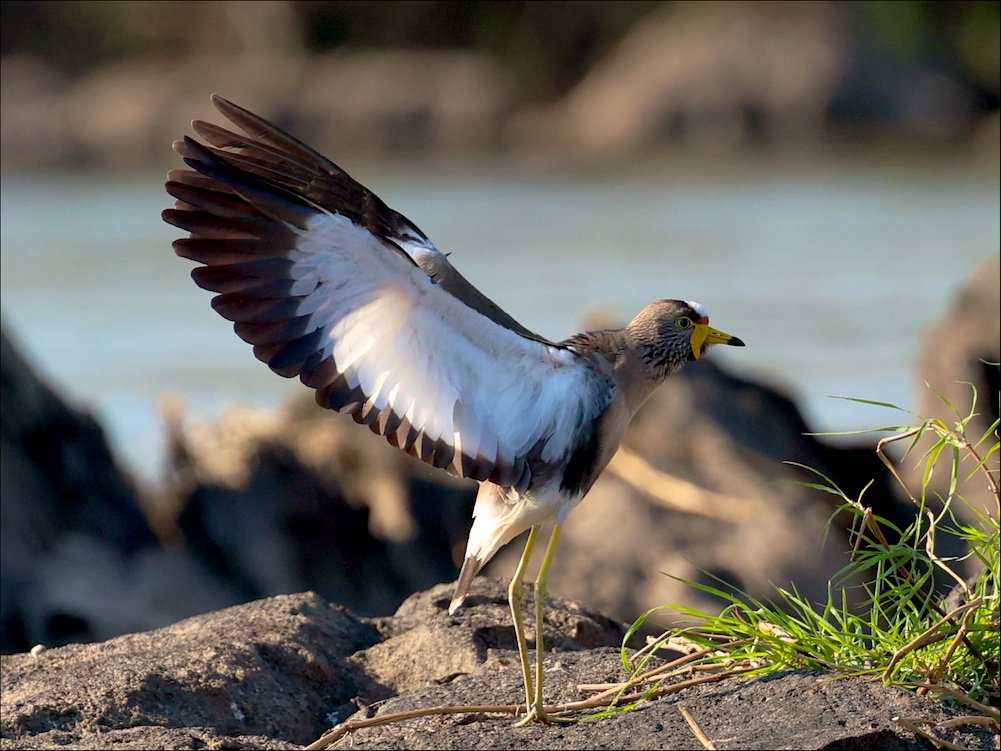 Wattled Lapwing flexing wings
Our conversation on the dock before we started the cruise:
Chris: I’m a birder.
Austin: Are there any new lifers you are looking for?
Chris (pointing into the river): Well, one of them is the wattled lapwing and I think I see one over there on the rock.
Austin: Very good! What about the rock pratincole? Is that a bird you seek?
Chris: Yes! We’ve been searching for weeks and found nothing in the Chobe or at Victoria Falls.
Austin: OK. If we find this bird this evening, would you call this a good trip?
Chris: Yes, even a great trip!
Austin (pointing into the river): There’s one right over there on that rock.
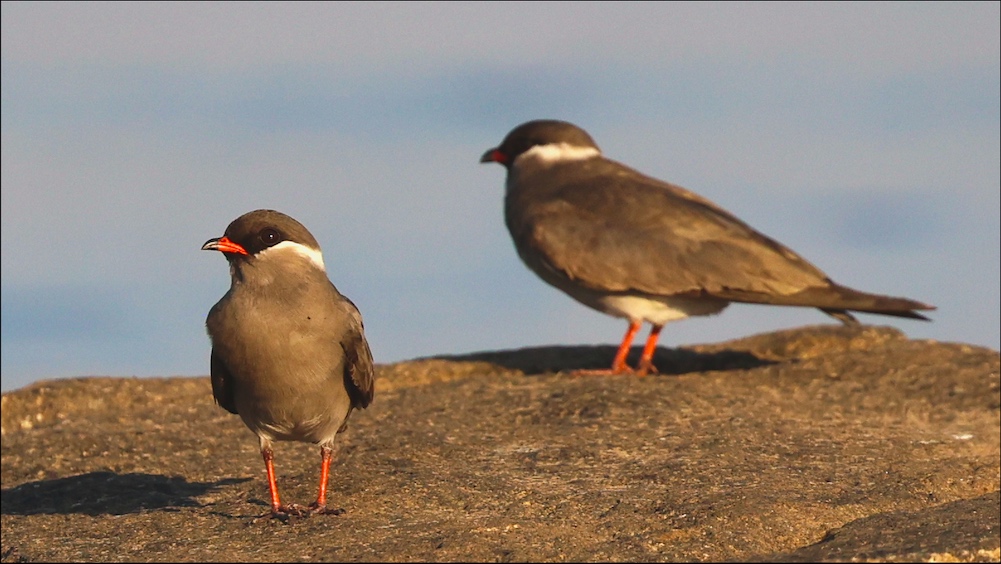 Rock Pratincole pair on Okavango River
Indeed there was, and we would see maybe 50 more as we navigating the rocks and rapids cruising downstream. As a joke, Ken says “if you want to make my trip great, find us an African finfoot!” Ken had recently watched a YouTube video of a bird photographer that spent months tracking this bird down, and Wikipedia says:
Finfoots are usually seen singly or in pairs. They are very secretive. Even experienced ornithologists see them very rarely, making them a prized sighting for birders and twitchers. Because they are so elusive, it is not known if they spend most of their time in the water, where they are almost always seen, or on land.
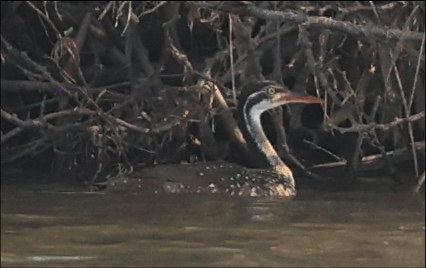 The elusive African Finfoot
And we found one! Austin spotted it first on the far (southern, Namibian) shore, then Ken and he was able to direct me, and I got this photo before the bird disappeared into the brush. Austin’s experience is that they often retreat and hide on land when disturbed.
This sighting was such a rarity that I had a naturalist for eBird / Cornell (volunteer I’m sure) reach out to me excited to see my photo evidence, which I added to the sighting list. He told me the last record of a sighting there was 2017 - not just in eBird but also in the local southern African atlassing map (SABAP, which I also use to prepare my target lists).
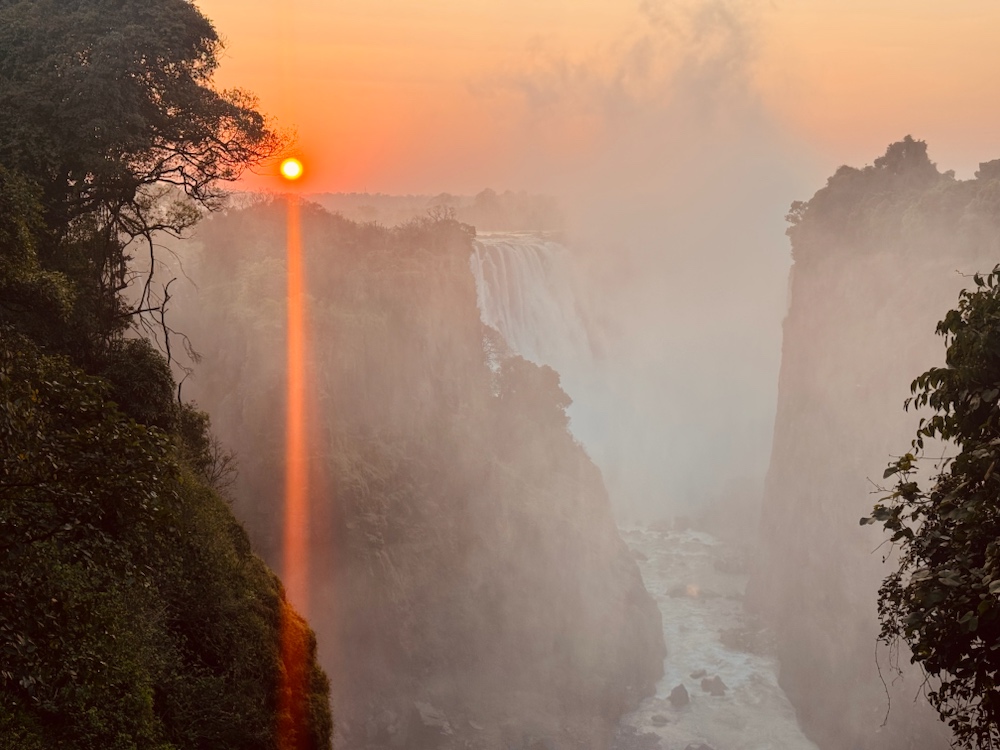
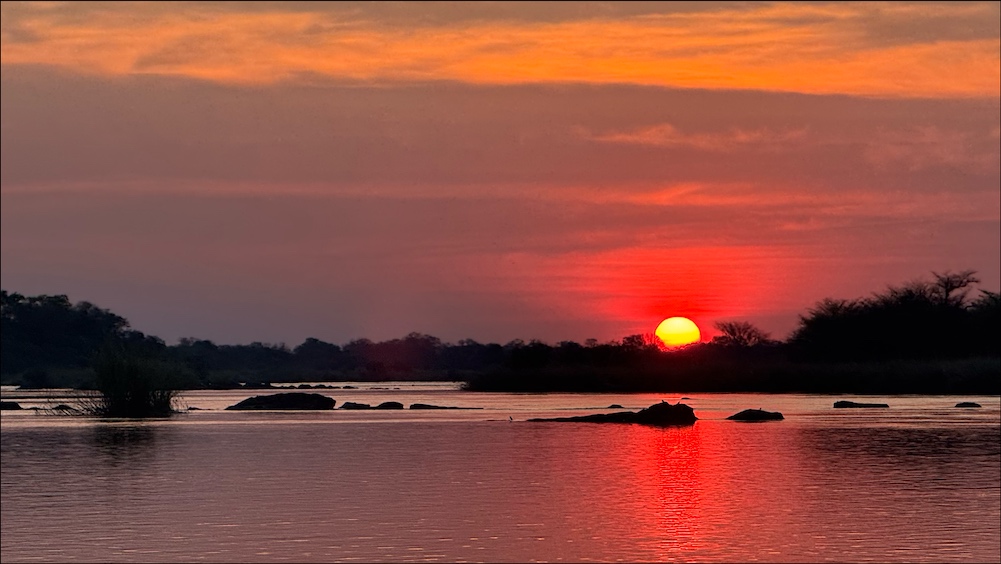 Sunset on Okavango River
Even without the bird sightings this would have been a great cruise, giving us a long look at the source river that empties into the delta and has been flowing so high this year that it has kept the delta flooded much longer than it has in years (decades?).