

Etosha National Park, Namibia
Our first big adventure in Namibia was a three night stay in Etosha National Park.
Etosha is one of the largest parks in southern Africa, with the focus being the Etosha pan (reminder: a pan is a flat, open expanses of ground covered with salt and other minerals found in a desert) which is entirely enclosed by the park and which takes up nearly a quarter of the park’s area.
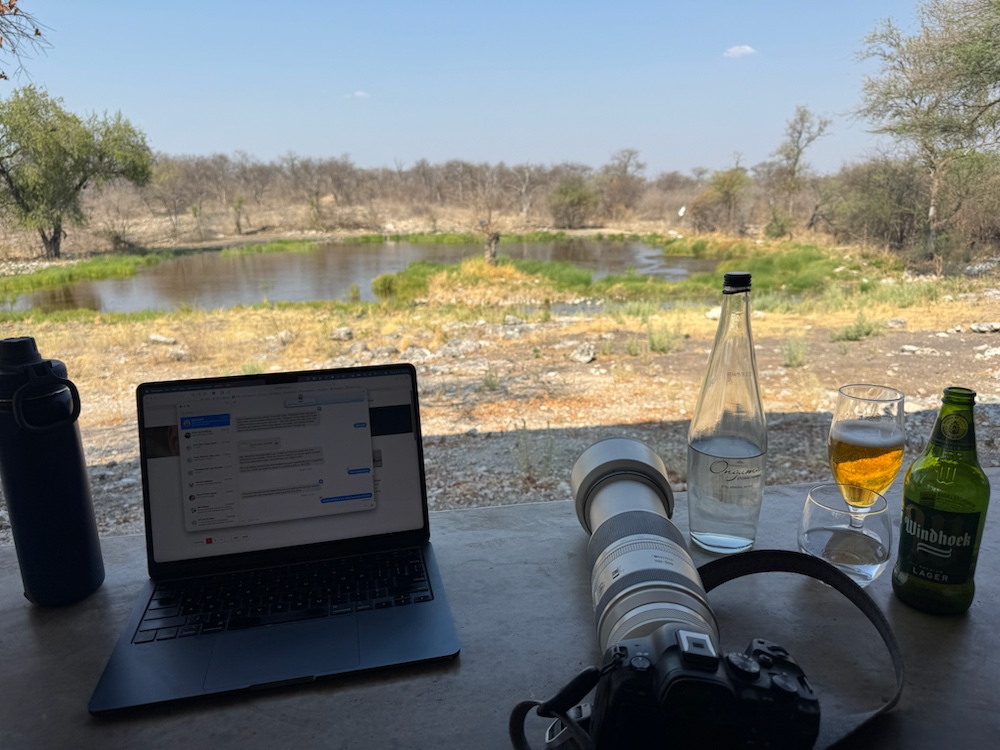 Enjoying water hole at Onguma Tamboti camp
The desert around Etosha means the focus for wildlife would be on the water holes, some of them man-made others naturally occurring. Our visit started with a stay in the Onguma concession reserve east of the park at the Tamboti camp, a very-well run facility with a nice restaurant overlooking their water-hole. Besides the bird life this is where we got our best looks at bush duikers (see my post on antelope for those).
We officially entered the park the next morning via the Namutoni Gate where we faced our third animal products checkpoint in 48 hours (Namibian border, just west of the city of Rundu, and entering the park). Namibia has worked hard to keep foot and mouth disease out of the country (there are problems with this in Botswana) but the week we arrived there was a herd of cattle with some occurrence so the country moved towards a lockdown on meat transport. We were thankful we hadn’t purchased any meat in Rundu. They were also supposed to be checking us for plastic bags and confiscating here but we were left alone on that front.
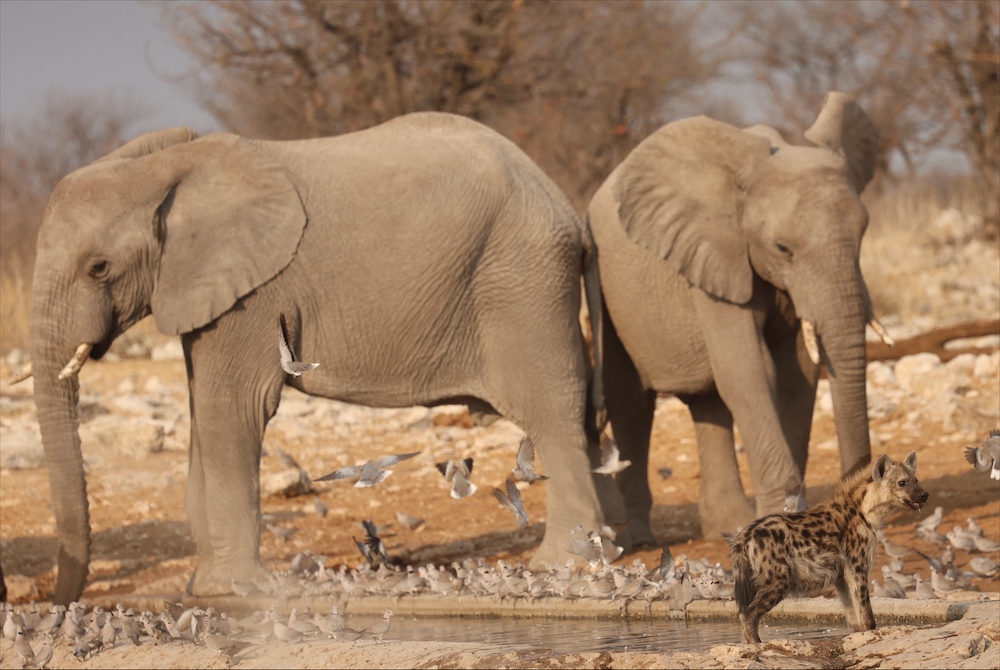 Spotted hyena and elephants sharing water hole
We picked out a route to work towards Okaukuejo camp, wandering some of the side 4x4 roads to visit water holes we could see on the map purchased at the Namutoni shop. Our first stop had a large female spotted hyena tentatively sharing the hole with some African bush elephants, giraffes, and a few thousand ring-necked doves.
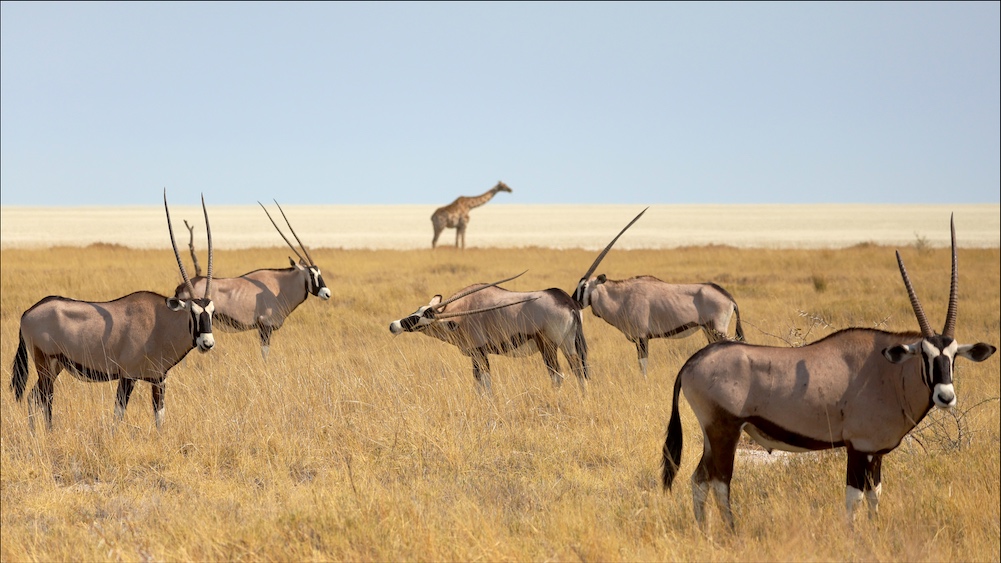 Gemsbock herd with giraffe
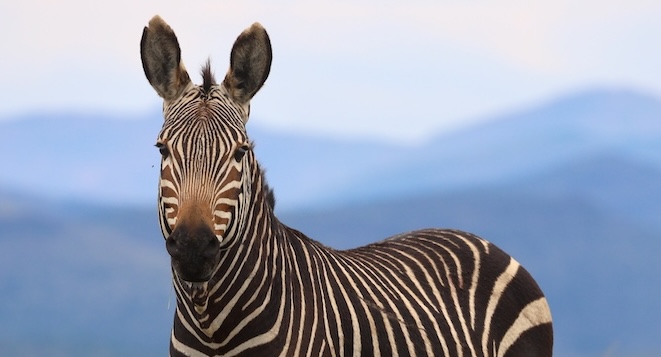
The theme for Etosha would be: massive herds, intermingling. Gemsbok and springbok would be the primary antelope, but we also saw black-faced impala, eland, kudu, steenbok, duiker, and dik-dik. We would also have the chance to see the mountain zebra, more rare than the plains zebra and distinguishable by the bold stripes continuing all the way down their legs. We didn’t get great sightings in Etosha but would later in Namibia.
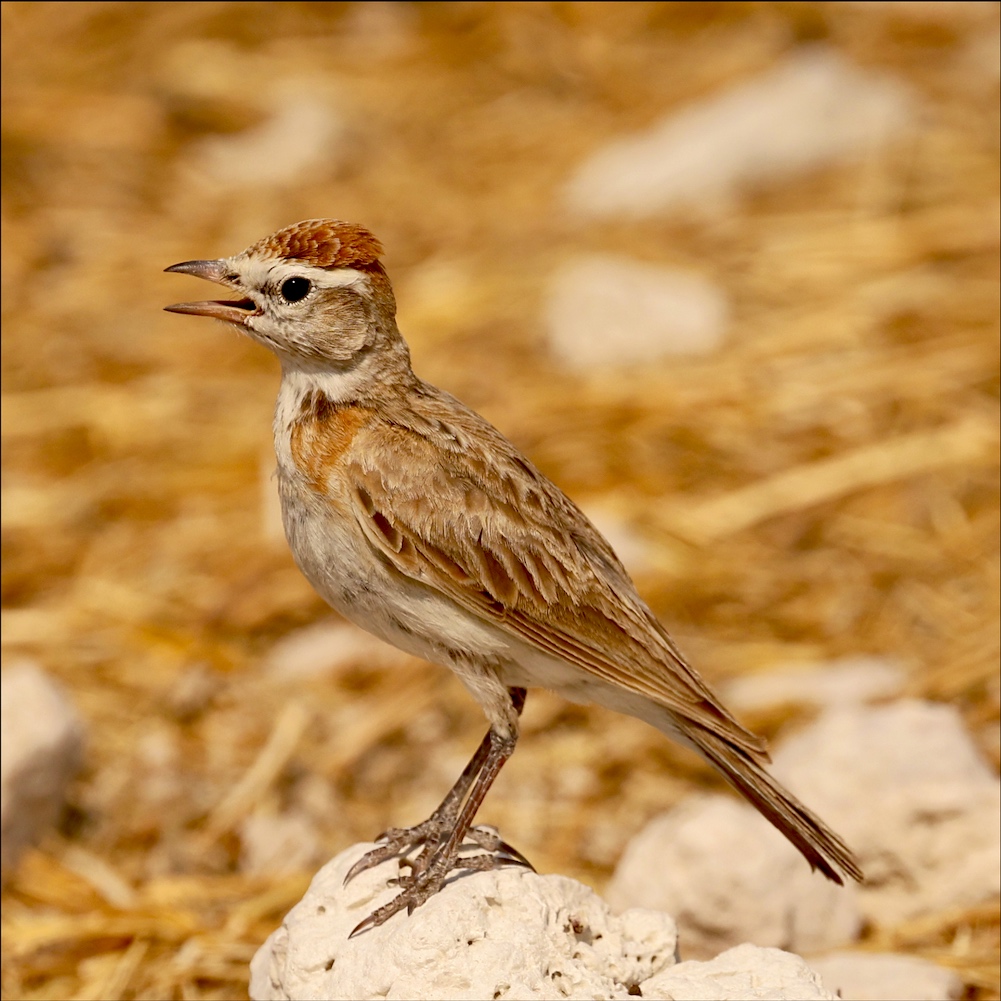 Red-capped Lark
Of course I had my bird targets, focused on endemic and near-endemic species as well as new ones that would be present because of the biome shift. One big change on this trip vs. two years ago is my focus on the smaller passerines (LBJs), such as larks, sparrows, warblers, and weavers. Preparation is key, which means having a target list and then studying for identifiable features and behaviors. The larks are very difficult: they will appear on the ground near the road, then dash into or behind a patch of grass or a bush. And they mostly look alike. Honestly we’ve grown weary of distinguishing the Sabota lark from the fawn-colored lark and honestly even the African pipit. The red-capped lark was a bit easier with his red hair piece pasted on top of the head.
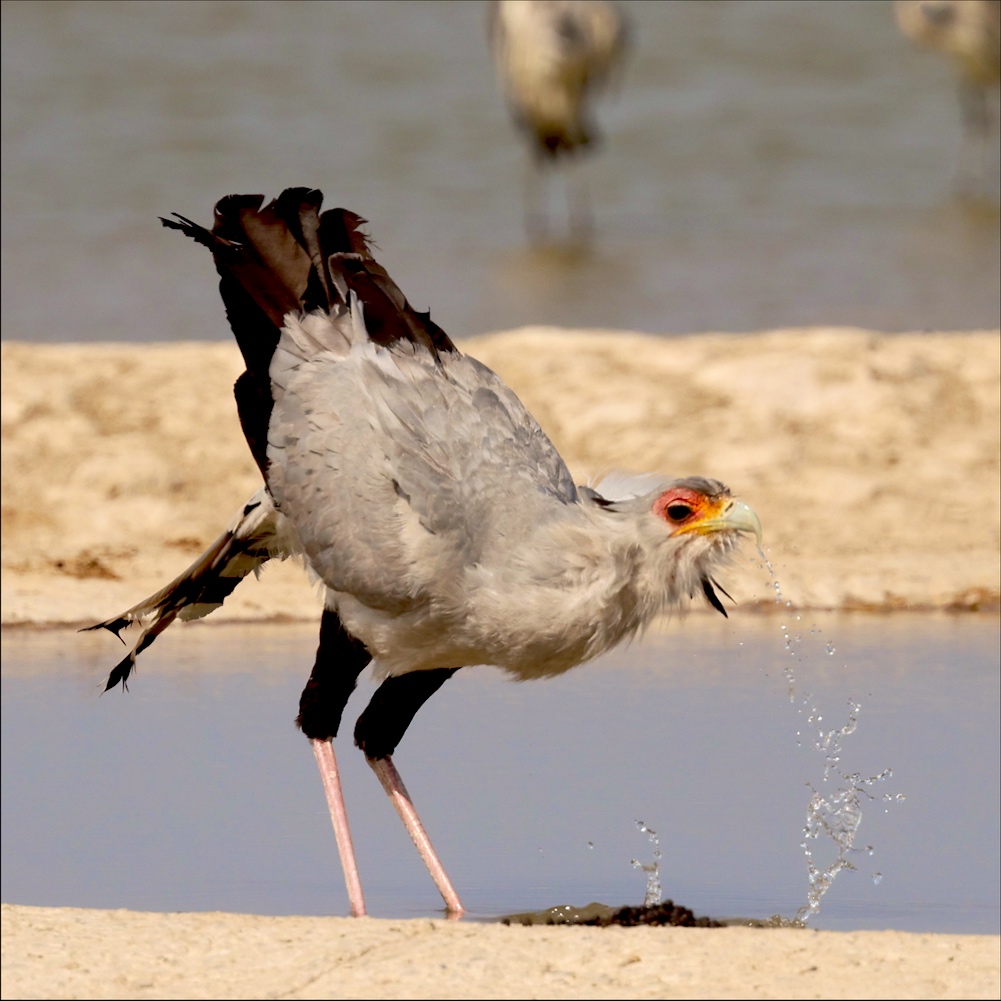 Secretarybird drinking from water hole
We continued to have good luck finding secretarybirds and we tracked this one down as he hunted on the way to a water hole. The animals are at their most vulnerable when drinking and we are constantly fascinated watching them go through their preparation rituals before taking the plunge. This bird was facing off with a black-backed jackal as it drank, both constantly eyeing the other as a potential predator.
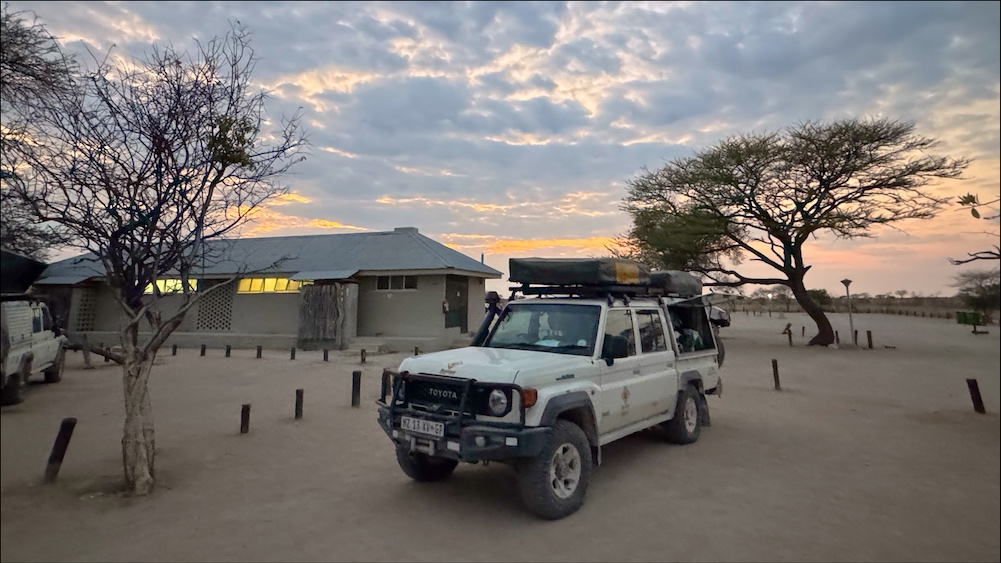 Campsite at Okaukuejo
Our camp in the middle of the park was the crowded park HQ, Okaukuejo. The campsite is basically in a parking lot where you are crowded up against the other campers, and in our case situated right next to the crowded ablutions block. On the bright side there was a nice pool and a restaurant for us to enjoy. With just the two of us we are always opting for a restaurant vs. cooking if the opportunity presents.
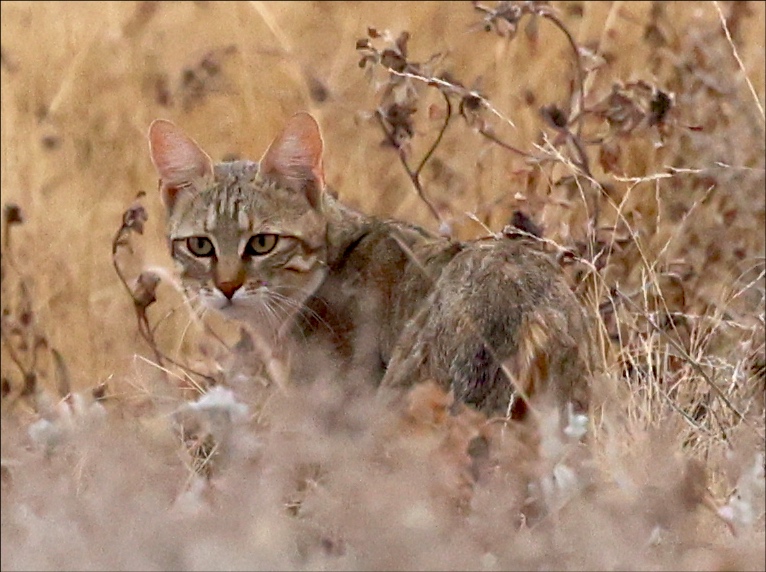 African Wildcat
Early the next morning I spotted an African wildcat crossing the road and it hung around long enough for a decent photo. From the angle I shot that hides the legs and tail it is indistinguishable from a domestic house cat. They are very common in Africa and their biggest looming threat is hybridization with domestic cats, sometimes intentionally (such as to selectively breed the bengal cats via the related sub-species Asian wildcat) and sometimes because they are living near communities and a domestic cat population.
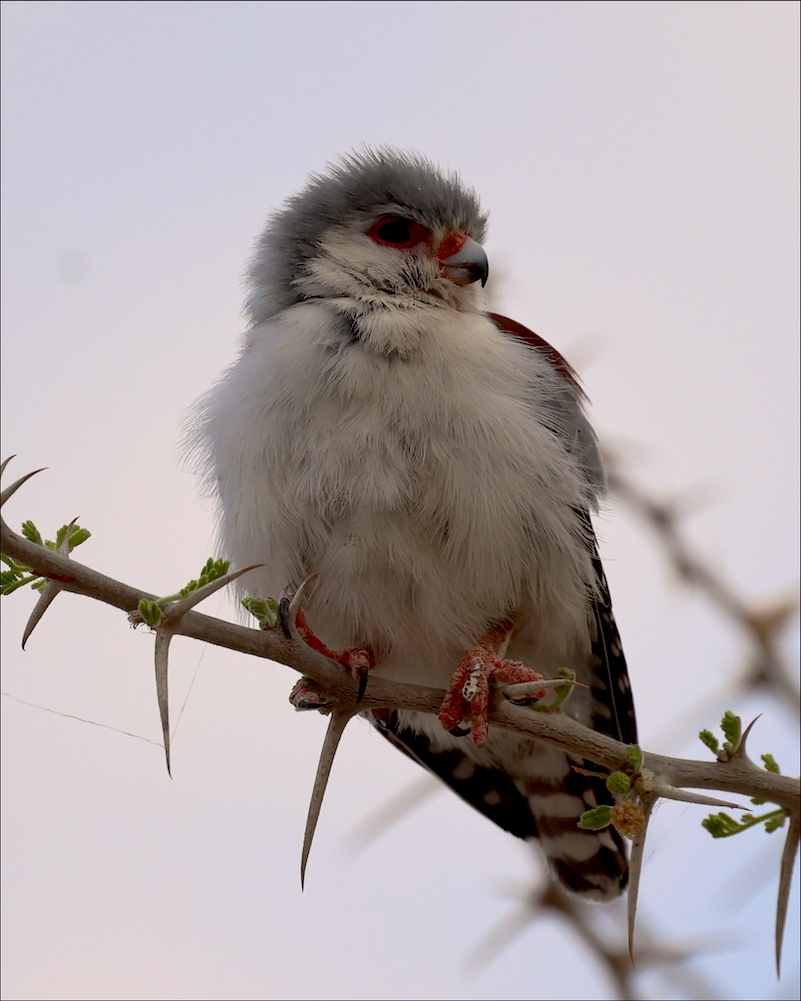 Pygmy Falcon
Shortly after the cat I spotted what look like a sparrow weaver in the tree above the road but then noticed the longer banded tail. I yelled “stooooppp!” to Ken and we back up to spot this pygmy falcon. He’s smaller than he looks in the photo, weighing only about 2oz. That’s about half the size of the smallest falcon found in North America, the American kestrel.
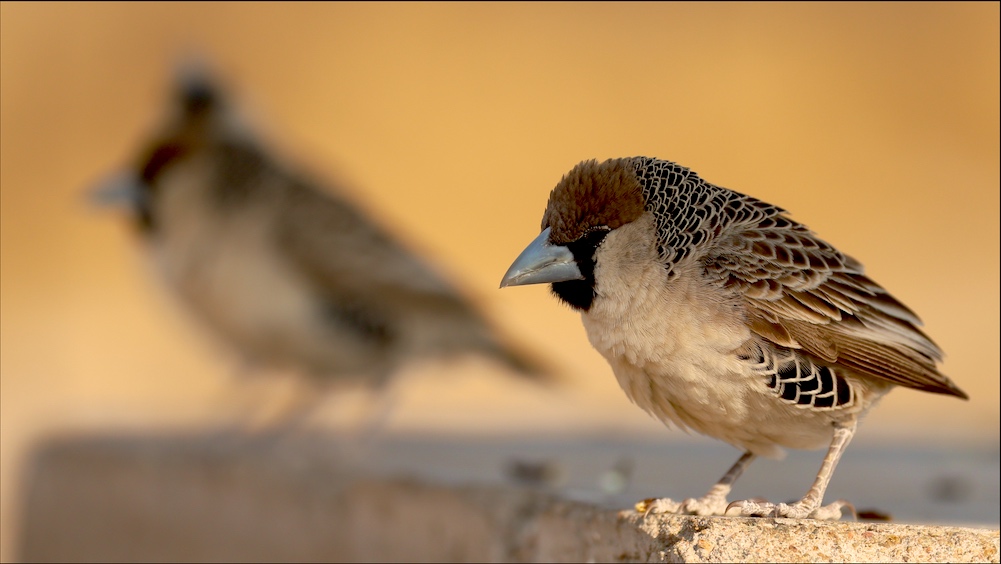 Sociable Weaver
We also made friends with our new ubiquitous neighbors in Namibia, the sociable weavers. Every camp we would be at for the rest of our stay in the country we would be greeted by these little guys. They are gregarious and sociable for sure.
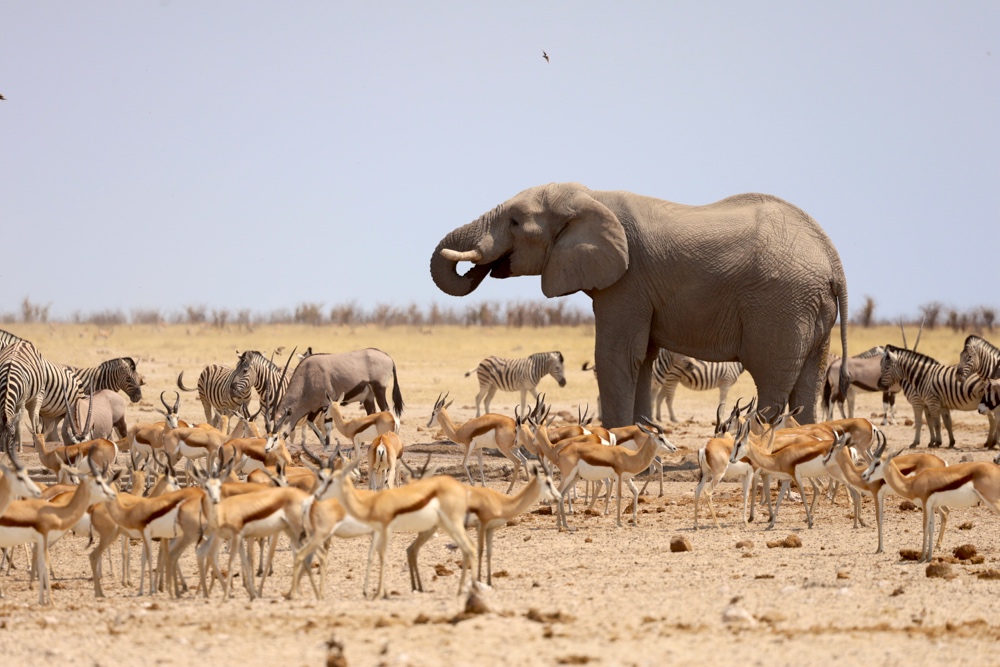 Elephant takes over the water hole
Several of the water holes on the map were dry, so when we found one that had ample water we would often see huge co-mingled groups of animals. This one in the central part of the park had big herds of springbok, gemsbok, and plains zebra when we arrived. I made a comment along the lines of “it would be fun to see an elephant show up and bully these herds away from the hole” and that’s exactly what happened 15 minutes later. Everybody made room for the elephant, who of course positioned himself right where the cool fresh water flows into the hole.
After this hole is when we found our big surprise of the day: the road to our camp was closed for construction and we had to back-track over 60km via detour on a terrible road to eventually wind our way to Olifantsrus camp. Nothing was mentioned at the gate regarding this, and I can imagine folks that were planning their time precisely to get to camp by sunset would be left hanging driving (illegally) in the dark to find their way home.
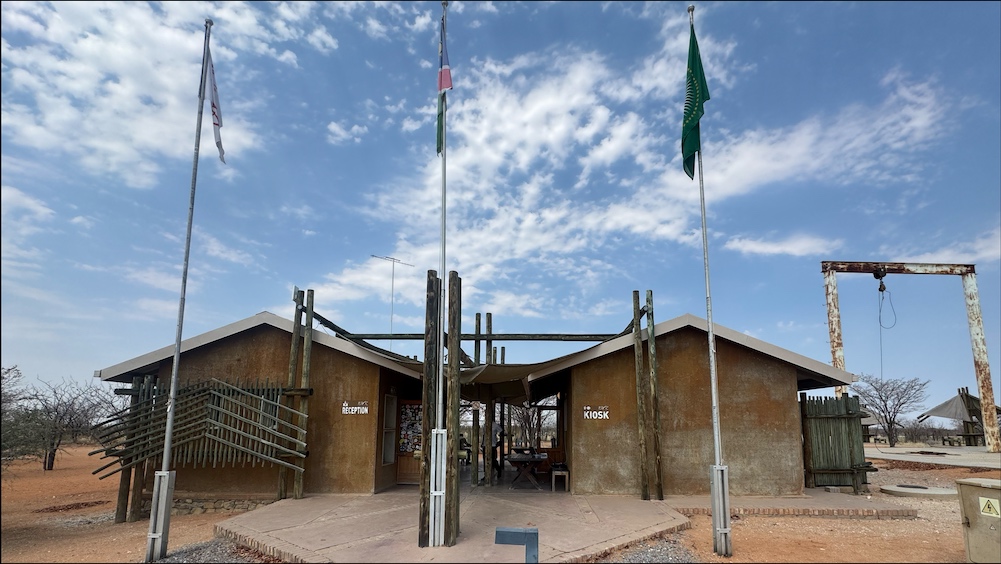 Camp reception at Olifantsrus
Olifantsrus is the newest camp in the park, designated just for camping so without a lodge and real restaurant. We thought this might be a nice change-up and be a bit quieter and nicer than the Disney-like feeling of the other bigger camps. We were sorely disappointed in the state of affairs at this camp that is just over 10 years old.
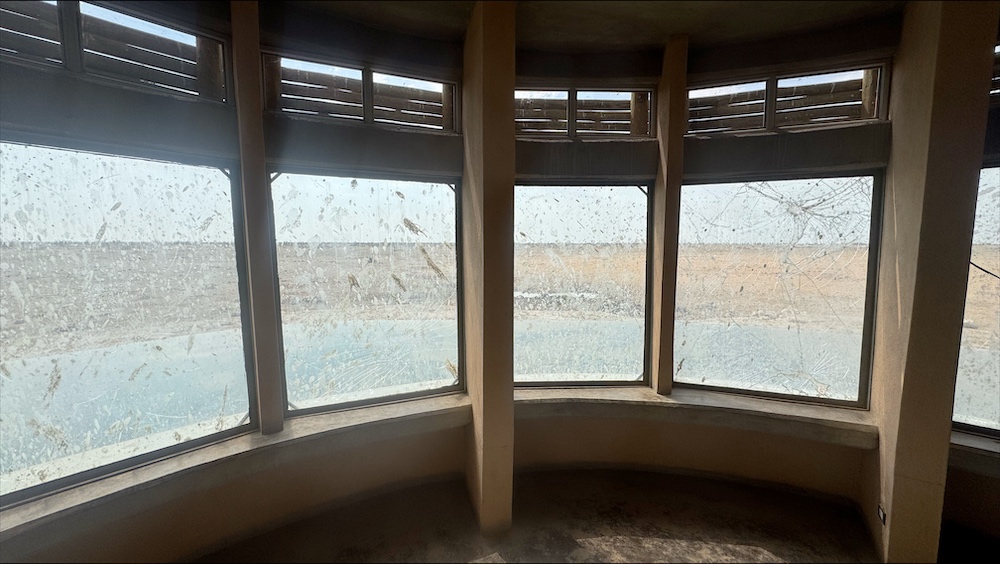 Downstairs in the hide at Olifantsrus
The general trend we’ve seen in Namibian national parks: infrastructure that looks like it was put in with care and quality materials, that has had zero ongoing maintenance. There were two new picnic areas we drove by that day that had been completed earlier this year, and both had their water tanks disconnected from the ablutions area. Ken noticed one of the regular safari guides throwing a rock at the tank in disgust at the poor state of affairs. You can’t blame the elephants for this: the picnic areas are fortified inside tall fences with a manually operated swinging gate.
Similarly there is a beautiful two-story hide next the water hole at Olifantsrus, with the downstairs presumably designed for up-close eye-level viewing of the animals coming to drink. As you can see from the photo above you can’t even see through the windows. We asked the staffer who checked us in why the windows aren’t maintained. “The elephants dirty the windows every day, and we can’t clean them unless we are accompanied by a department of wildlife staff member and they will only come here every three months.”
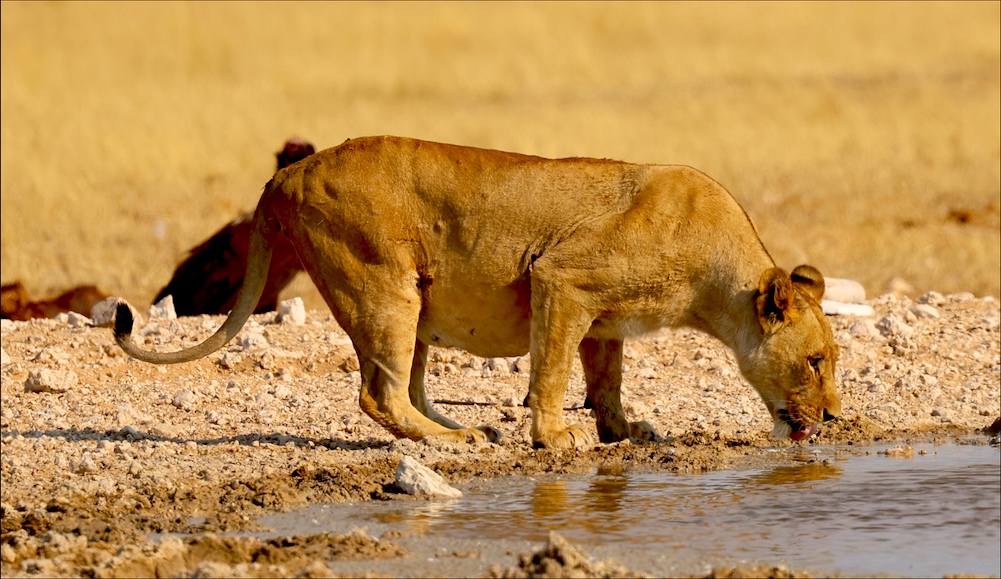 Lioness drinking water
Rather than hang out at the camp water hole which had little activity going on, we drove over to the next hole to the west. I spotted a lioness crossing the grassy plain towards the hole so we pulled up and hunkered down for about an hour. After taking a drink the lioness laid down in the shade of a bush. Ten minutes later a male came strolling along through the same field and plopped down in a nearby shade area. Ten minutes after that another male did the same. While the lioness was laying there a giraffe came to the other side of the hole and cautiously bent down to drink, eying the lion the entire time. Not long after all three lions were there a bachelor eland who had been lingering near the hole came along to do the same, but it took him over 30 minutes to get the nerve to actually drink. Ken and I were imagining the risk assessment calculations going on in that eland’s brain.
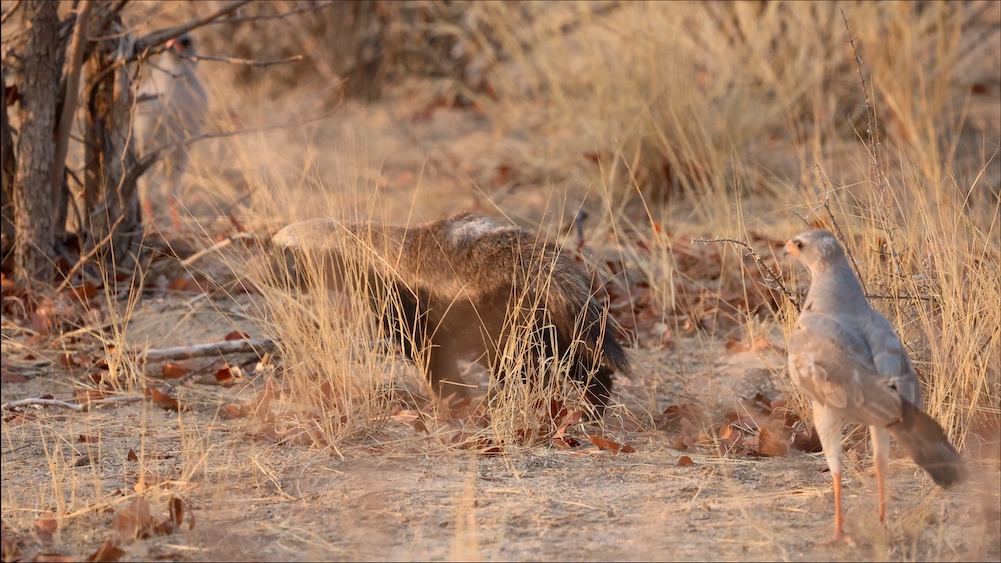 Honey Badger and PCGs
We left early the next morning to exit the park via the southwestern most gate and we encountered one of the stranger things we’ve seen on the trip: five or size pale chanting-goshawks mobbing a honey badger. We spotted the goshawks first and couldn’t understand why there was such a large group (we’d never seen more than two together) and what they were doing on the ground. Then voila a honey badger appears, and it looked pretty stressed to us. Further research indicated that this is common behavior: the PCGs feed on organisms flushed out by the honey badger, and at least one researcher claims that the honey badger “does not suffer any loss of foraging efficiency.” Ken and I aren’t so sure about that as it looked to us like they might have been competing over the same prey.
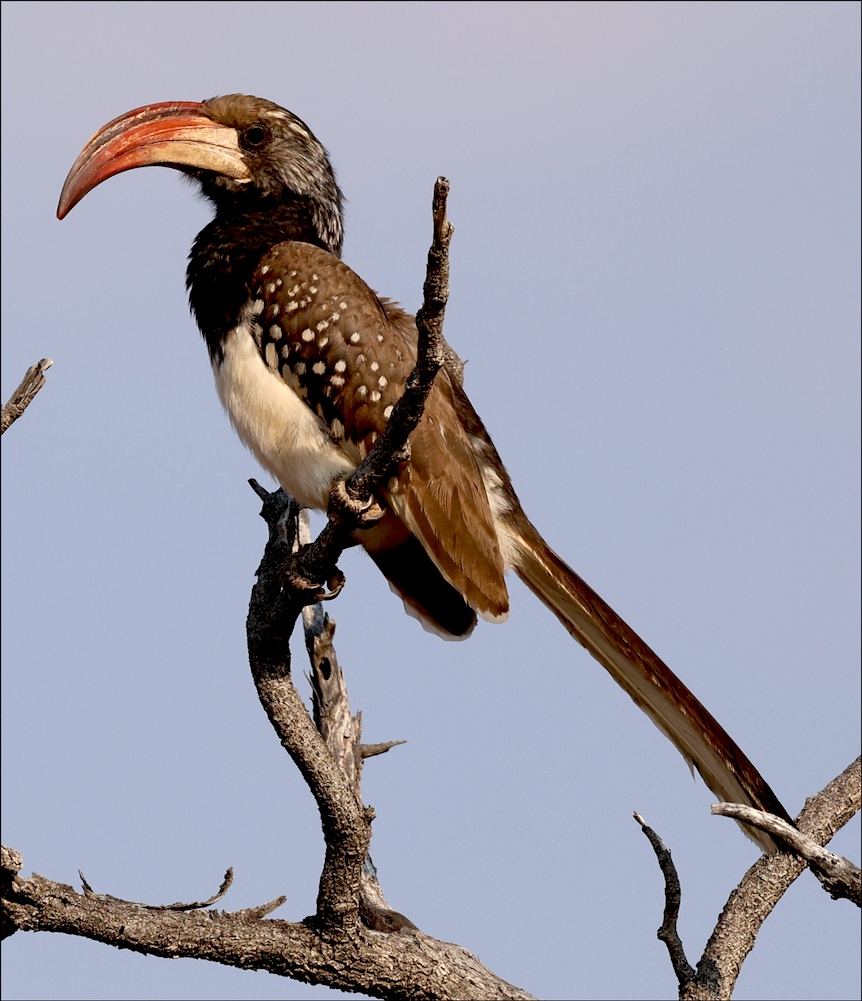 Monteiro’s Hornbill
On the drive out we also spotted our first Monteiro’s hornbill, a near-endemic species in Namibia (there is also a population in the southwestern part of Angola).
Our exit from the park was a bit contentious as a police officer noticed our plastic bags and wanted to know how we got in the park with them. We said “nobody asked” and he made some side comment about problems at the other gates. Meanwhile as we had our paperwork inspected for exit, he had a woman take out her suitcase, open it up on the entry road, and had her empty her toiletries nicely packaged in a small ziploc bag then throw away the bag.